

What is Sailing? A Complete Guide to Adventure on the Water
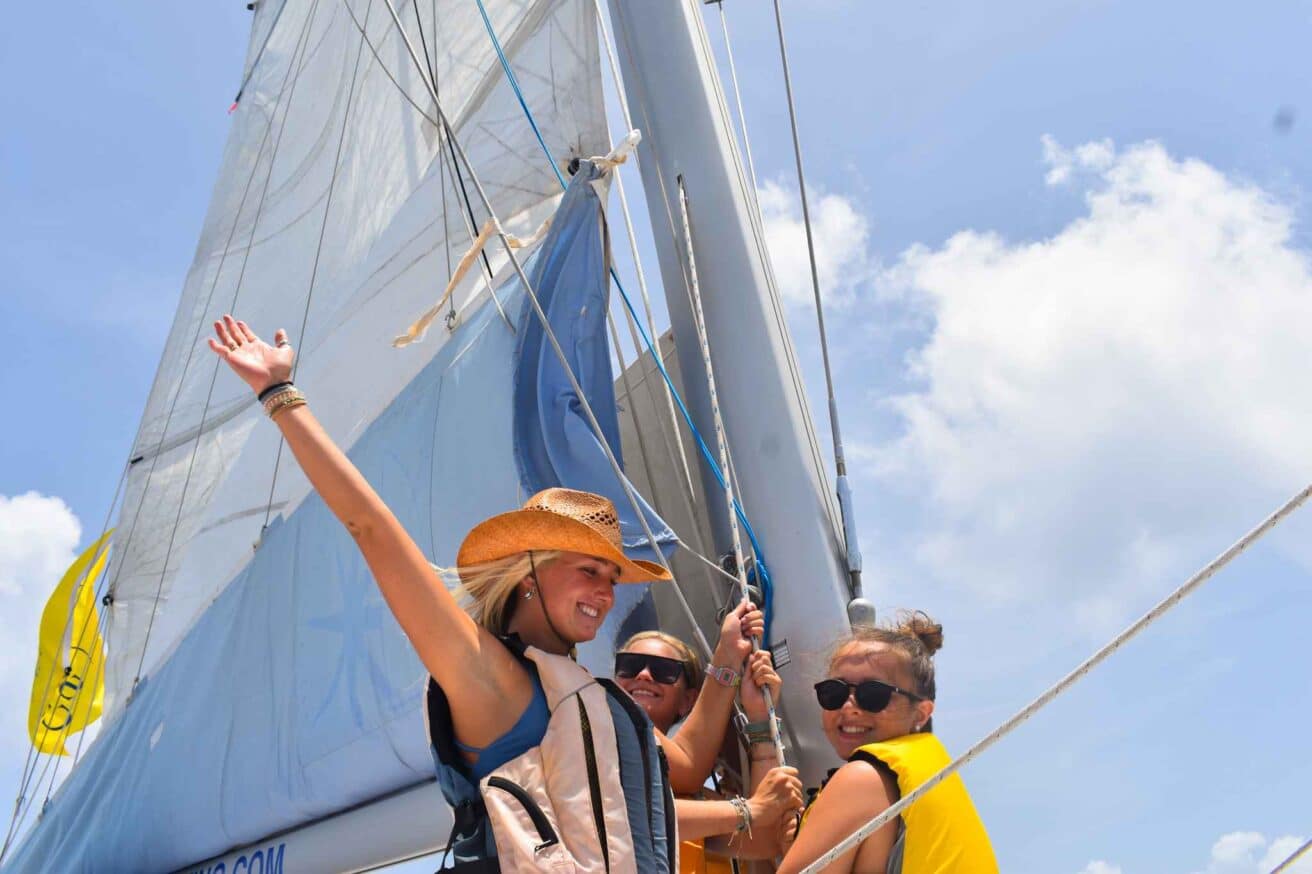
- Sailing works by using the wind to move a boat; the sail acts as an airfoil creating lift, which pulls the vessel forward through the water.
- A sailboat is your home on the water, with the hull, keel, sails, mast, and helm being key components for navigation and control.
- Unlike motor boating, sailing is a quiet, engaging, and eco-friendly experience, relying on skill, teamwork, and the power of the wind.
Sailing is not just an activity but an adventure that invites you to work with nature rather than against it. It is the art of using the wind’s power to propel a boat across the water, creating a journey filled with both freedom and challenges.
The British Virgin Islands offer sparkling blue waters and steady winds, making it one of the best places in the world to sail. With the right training, anyone can learn to command a vessel, and at the heart of Sail Caribbean, teens have been seen for years working together, gliding from island to island and mastering the adventure of sailing!!
Sailing 101: How Wind and Sails Move a Boat
Sailing works by using the wind to move a boat. The sail acts like a wing or airfoil: wind pushes against it and creates lift, which pulls the boat forward through the water. By changing the angle of the sail, sailors can control how fast and in what direction the boat goes.
Even when the wind is blowing toward where you want to go, a boat can still move forward by tacking. Tacking means zigzagging across the wind so the boat can reach its destination. With practice, anyone learning to sail can take the helm and master these skills on the water.
The Anatomy of a Sailboat: Your Home and Vessel
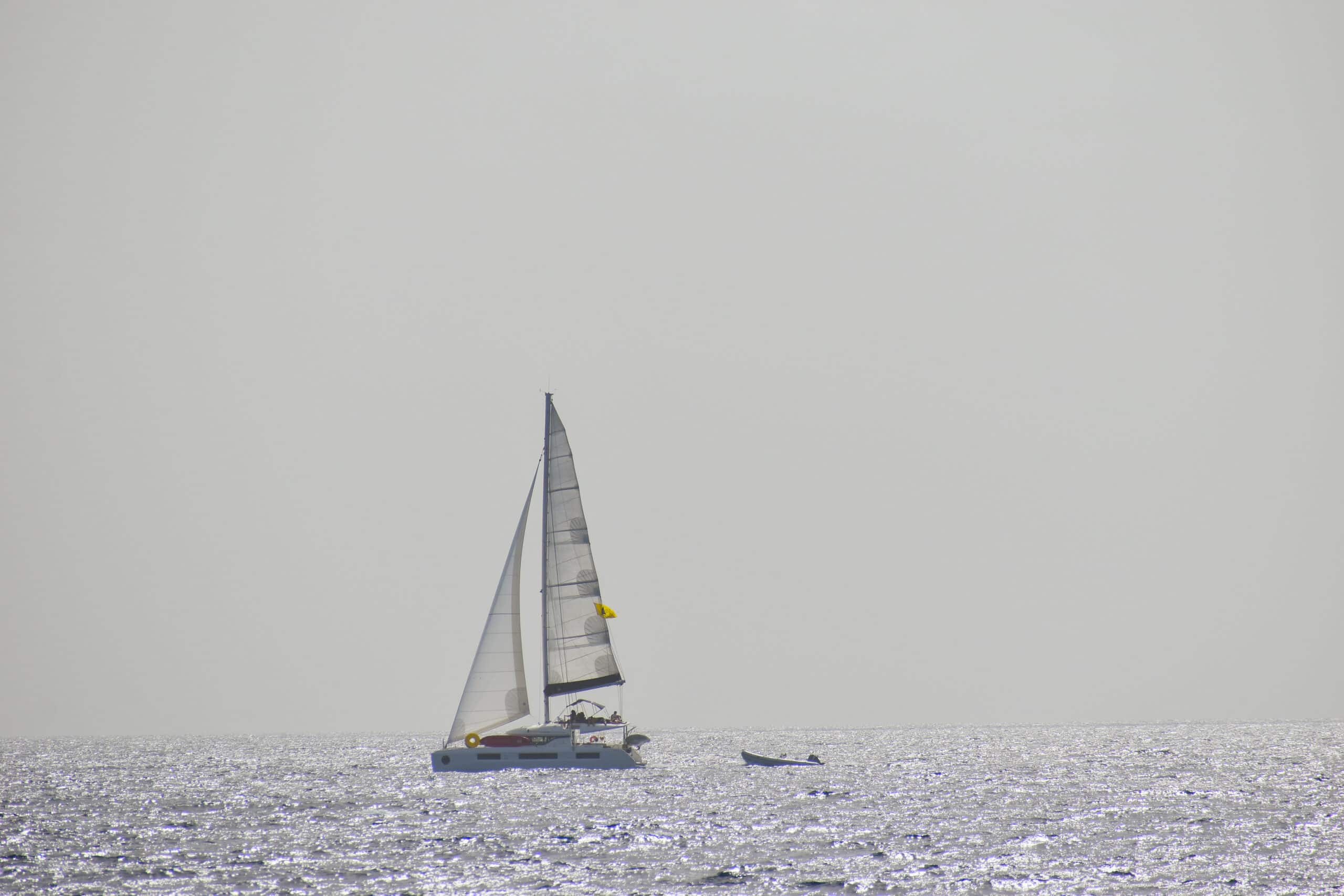
A sailboat is more than just equipment; it is your home on the water and a live abroad vessel that carries you on every adventure. Understanding its main parts helps beginners feel confident and in control.
- The hull is the body of the boat, and the keel is the fin below that keeps it stable in the water.
- The mainsail and jib act as the boat’s engines, catching the wind to move you forward.
- The mast and boom hold up the sails, but be careful of the boom as it swings when the sail changes direction.
- The helm, either a wheel or tiller, is your steering center, while lines and winches are the ropes and tools you use to adjust the sails and control the boat.
What’s the Difference? Sailing vs. Motor Boating
Both sailing and motor boating offer incredible ways to enjoy the water, but they deliver very different experiences, one is powered by the wind and teamwork, the other by engines and speed.
- Sailing is all about the journey. It uses skill, teamwork, and the wind to move the boat, making it quiet, engaging, and eco-friendly.
- Motor boating is usually about the destination. It relies on engine power and speed, so the focus is more on getting somewhere than on the experience of moving with nature.
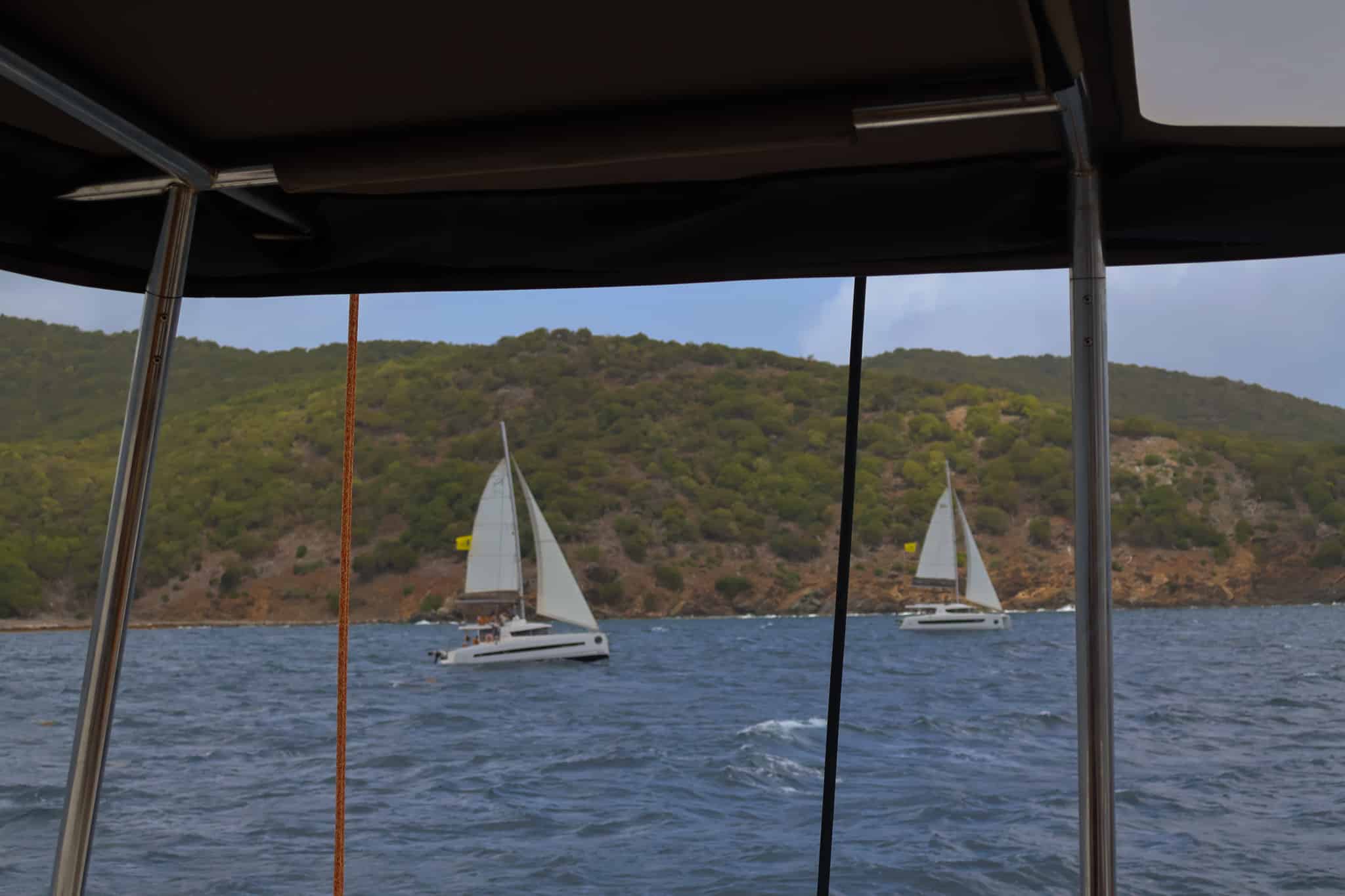
Check out what our typical catamarans look like here!
How to Learn Sailing
What Personal Gear Do You Need?
When you’re learning to sail, it’s important to have the right gear to stay safe and comfortable. Bring sun protection such as sunscreen, a hat, and a rash guard to protect your skin while on the water. Most importantly, the boat is your main piece of equipment, and life jackets are always provided and required at Sail Caribbean to ensure everyone stays safe.
Check out our packing list for more!
The Sail Caribbean Way: Learning by Doing
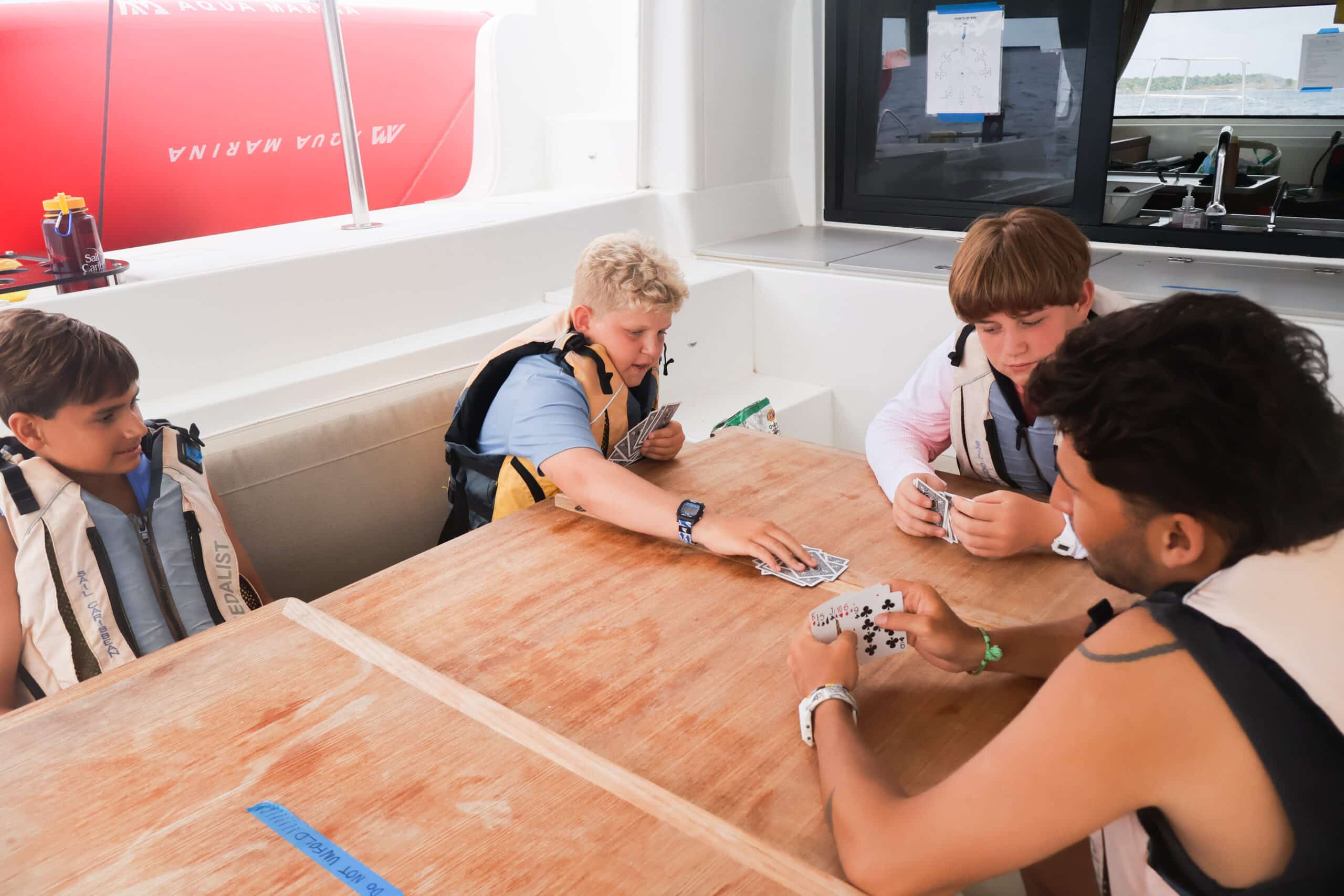
There are many ways to learn how to sail, but few give you the chance to live aboard a yacht on the Caribbean Sea with friends from around the world. Unlike a short weekend course, Sail Caribbean’s immersive programs let teens learn by doing; sailing, navigating, cooking, and managing their boat as a real crew. It’s hands-on learning 24/7, surrounded by turquoise waters and steady trade winds.
As students build skills and confidence, they can earn Sail Caribbean Certifications that recognize their progress:
- Crew Certification: Learn the basics of sailing and teamwork on a large sailboat.
- Bosun Certification: Advance to handling sails, navigation, and leadership.
- Mate Certification: The top level, for experienced sailors ready to lead their crew.
Sail Caribbean students can also earn ASA certifications, like Basic Keelboat and Bareboat Cruising, recognized around the world. Read more about the certifications we offer here!
Is Sailing Hard to Learn?
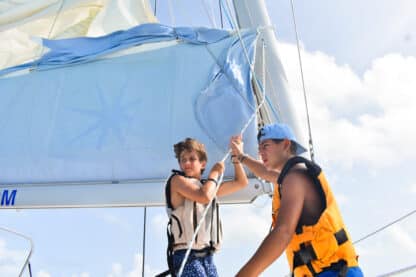
People often say sailing is easy to learn but takes a lifetime to master, and that’s part of the fun! We have professional instructors and a supportive team environment so that beginners quickly pick up the basics and can confidently help handle a boat in just a short time. Every new skill builds on the last, turning first-time sailors into capable crew members ready for adventure.
Do I Need to Be Really Strong to Sail?
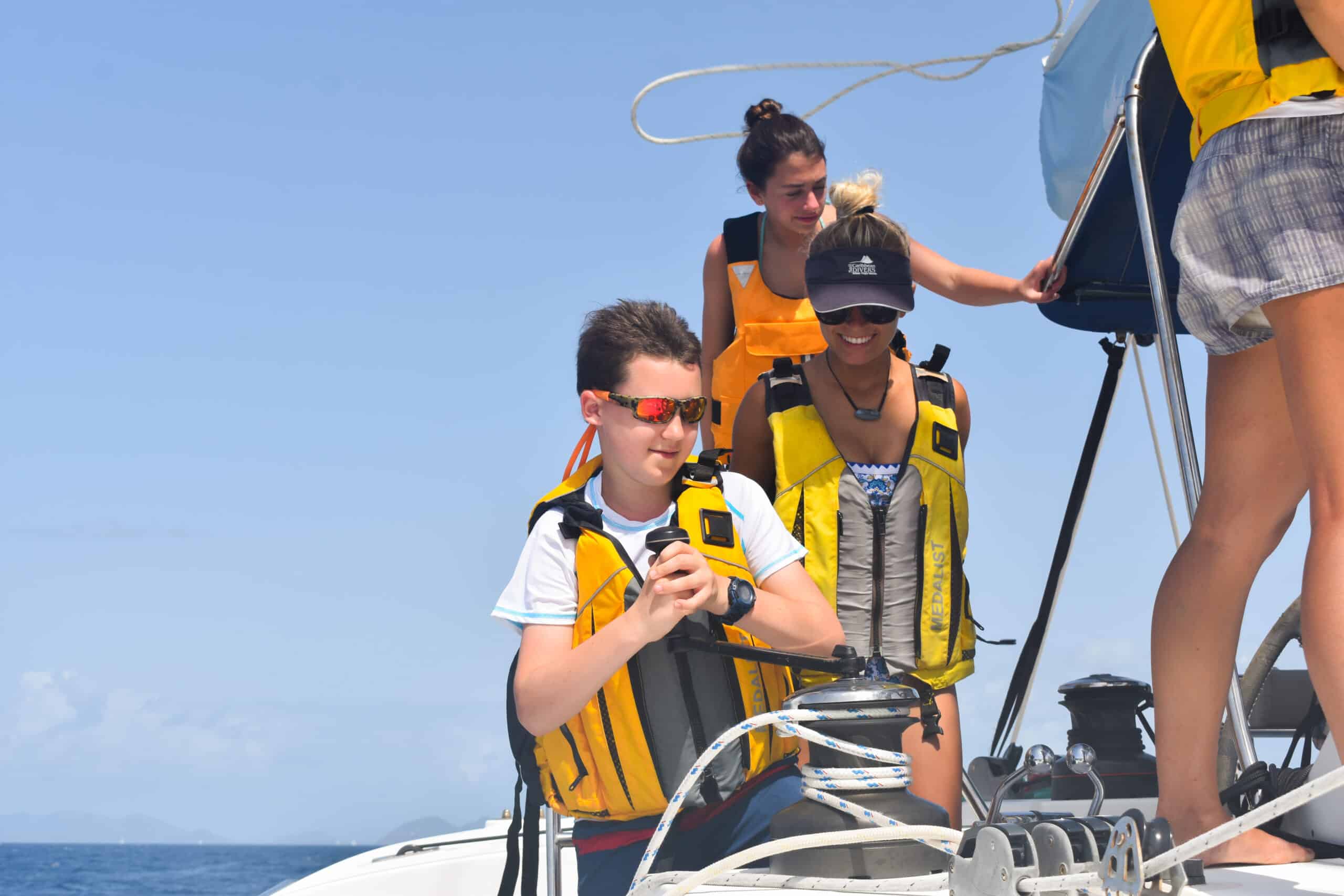
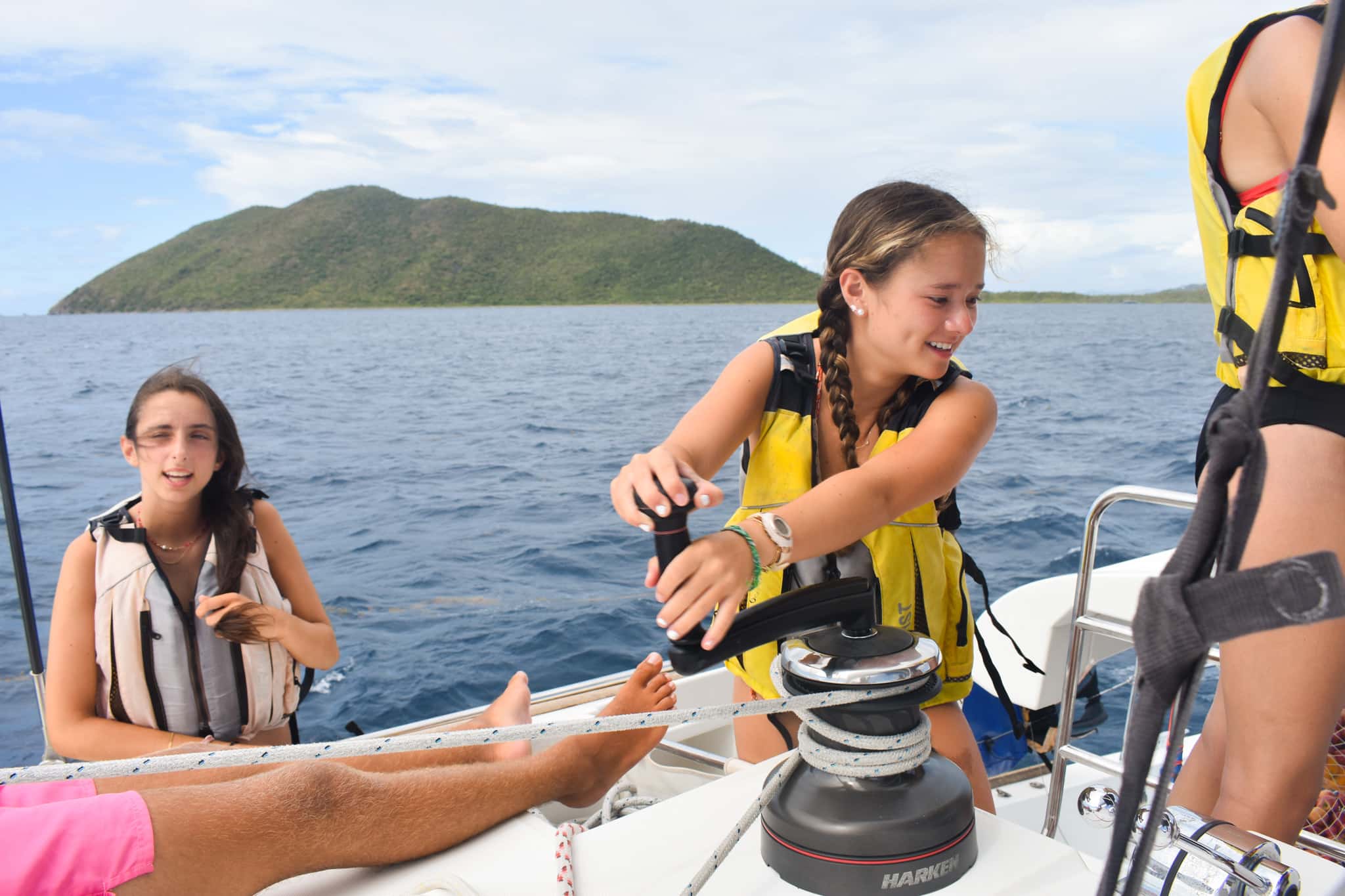
Not at all! Sailing is more about technique, teamwork, and tools not brute strength. Equipment like winches helps handle the sails, so it’s a sport of finesse, coordination, and smarts. Working together as a crew makes every task manageable.
Is a Swimming Background Important?
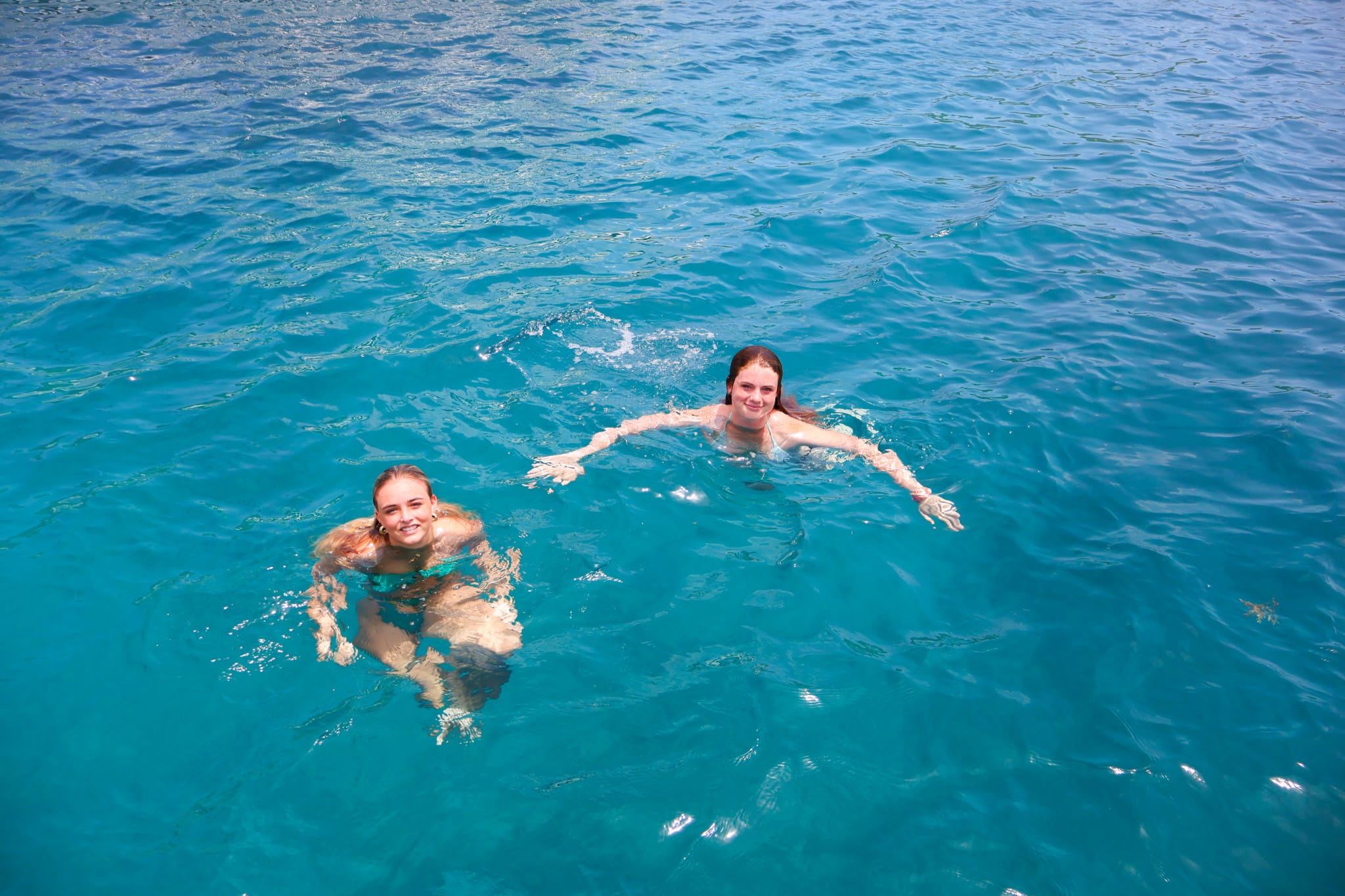
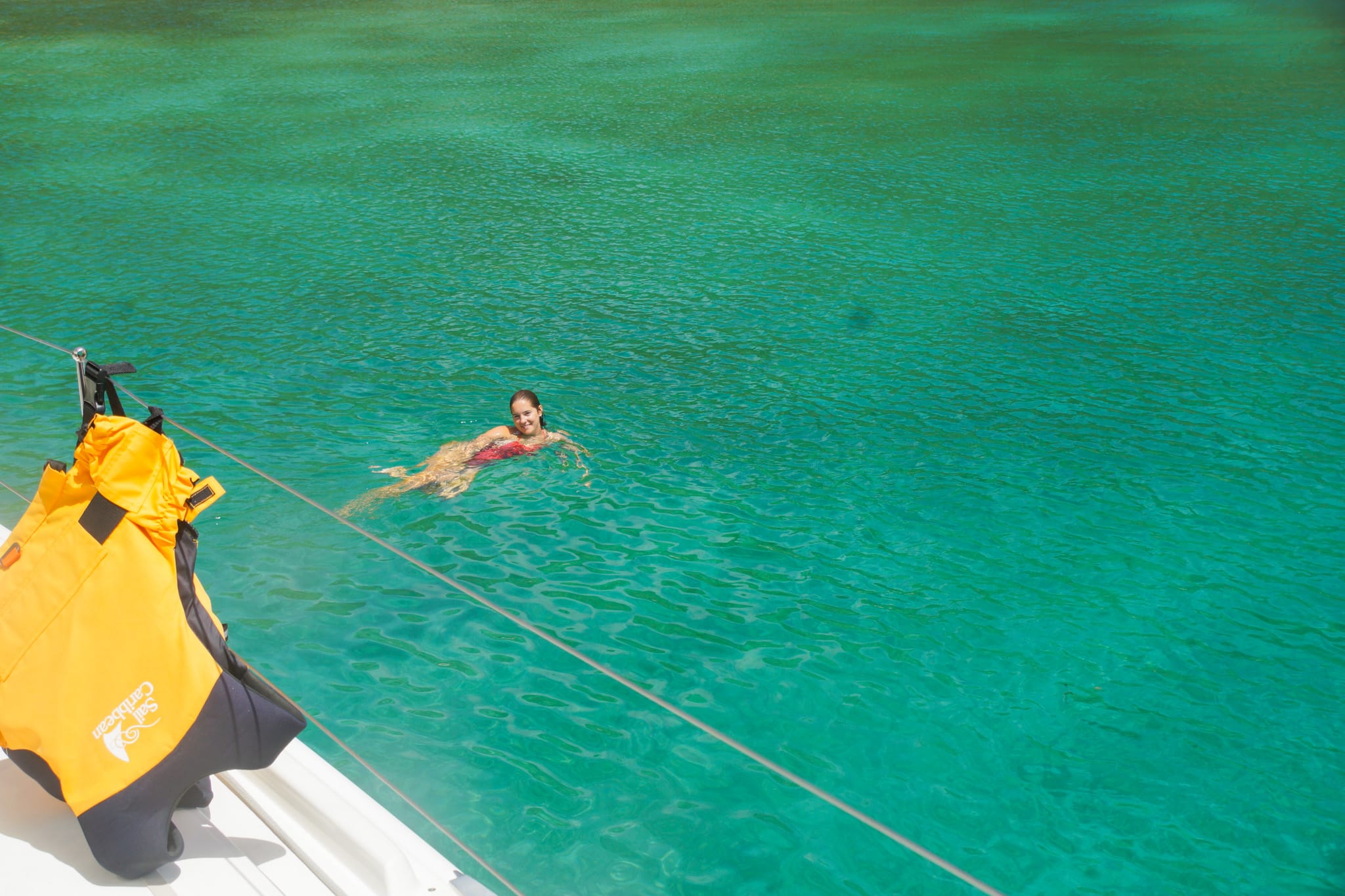
Yes, being comfortable in the water is important for any ocean adventure. While everyone wears life jackets for safety, we also do a basic swim test to make sure students feel confident in the water. It’s all about safety and building comfort on and in the sea.
What’s the On-Deck Experience Like?
Life on deck at Sail Caribbean is something you have to experience to understand. All around you, your friends are in their roles for the day; some cranking winches, others calling out wind direction or steering at the helm. The boat hums with energy as everyone works together to keep things running smoothly. You can hear the rush of blue water along the hull, feel the boat lean into the wind, and when the engines turn off, there’s this peaceful glide that makes all the teamwork worth it.
Getting to that moment takes communication, focus, and a lot of teamwork. It’s not about one person doing it all, it’s about everyone working as a crew. And when the sails fill and the boat takes off across the water, that’s a win the whole team celebrates together.
Read more about a typical day on board at Sail Caribbean.
the Adventure: Sailing is Your Key to Exploration
At Sail Caribbean, sailing isn’t just something we do, it’s our vehicle to adventure. It’s our school bus, our car, our taxi, and our way of life in the British Virgin Islands. The boat is how we get from one island to the next, and it’s a huge part of the local culture. Out here, the sea is our highway, and every day brings a new destination.
Island Hopping is built right into our itinerary and is one of the best parts of the freedom sailing gives you. Whether we’re spending the day at Jost Van Dyke, Anegada, or Sandy Cay, our boats can take us there. But the adventure goes beyond the boat. We sail to new anchorages where we can snorkel in hidden coves, do watersports in blue bays, hike trails, or wander through local artisan markets for treats and souvenirs. Sometimes we even visit island resorts or rent trucks to tour the islands, seeing every side of the Caribbean up close.
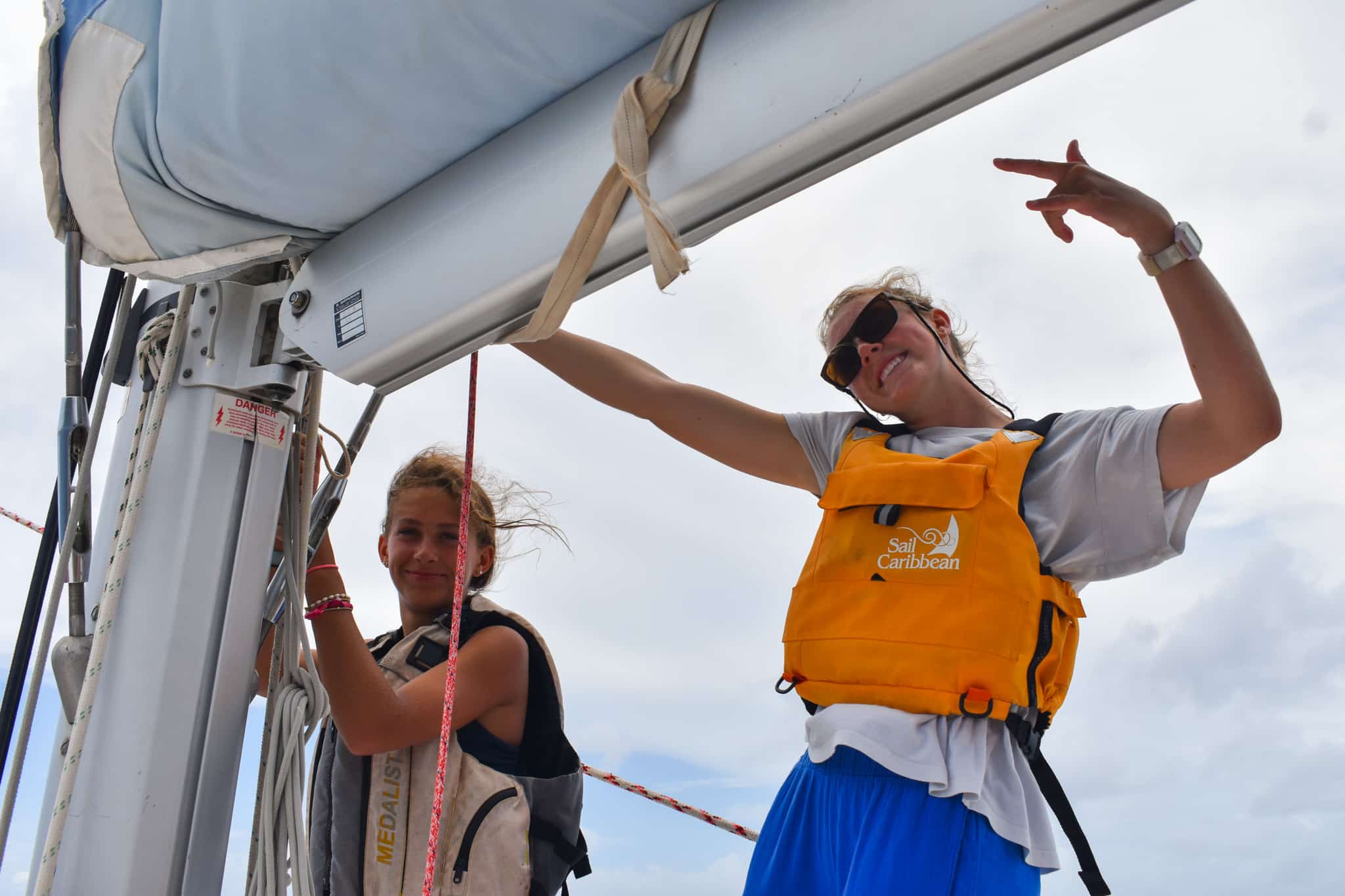
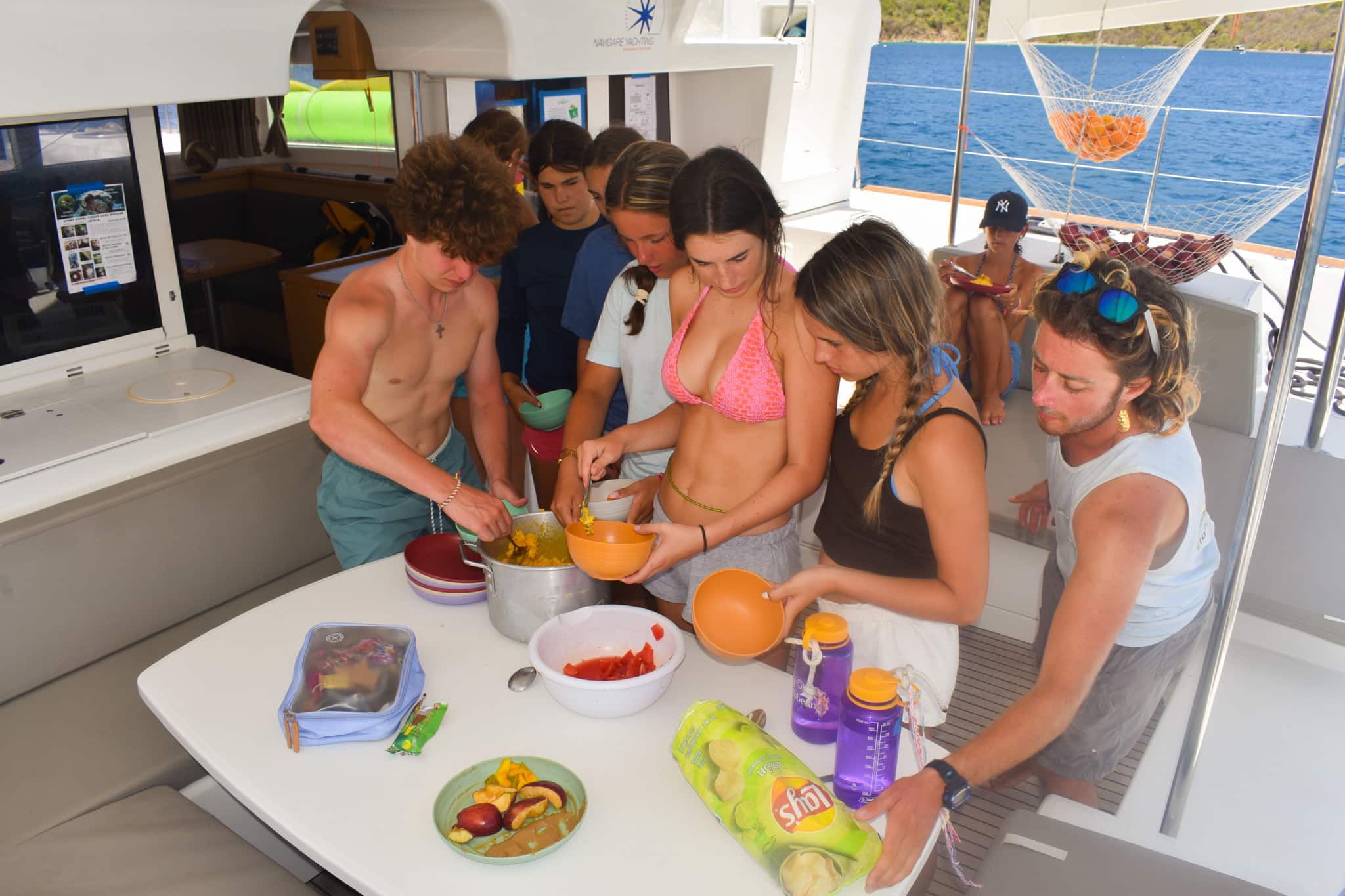
Along the way, students pick-up real-life skills that go far beyond sailing. They navigate using charts, cook meals for the crew, and rotate through leadership roles like skipper, mate, and captain. Every day brings new challenges, new teamwork, and a growing sense of confidence that carries far beyond the water.
A Culture of Safety: Is Sailing Safe?
Yes, sailing is very safe. With professional instruction, modern equipment, and well-established safety procedures, every student can feel confident while learning on the water.
At Sail Caribbean, safety is part of everything we do. Each boat has a trained skipper onboard, and our yachts are well-maintained and inspected regularly. We follow safety-first policies that keep both students and staff prepared, informed, and ready for any situation. When everyone knows what to do and how to work together, sailing becomes both safe and empowering.
Core Sailing Safety Tips
- Always know where the boom is.
- Keep one hand for you, one for the boat.
- Stay hydrated and wear sun protection.
- Listen to your skipper and communicate with your crew.
Conclusion: Find Your Adventure at the Helm
Sailing is more than just a sport, it’s an experience that builds confidence, leadership, and lifelong friendships. At Sail Caribbean, every voyage is a chance to grow, explore, and create unforgettable memories on the water.
Ready to set sail? Whether you’re a total beginner eager to learn or an experienced sailor looking to take your skills to the next level, your adventure starts here. Explore our sailing programs to find the right voyage for you.


