

Life at Sea: Living on a Sailboat vs. Land Camp
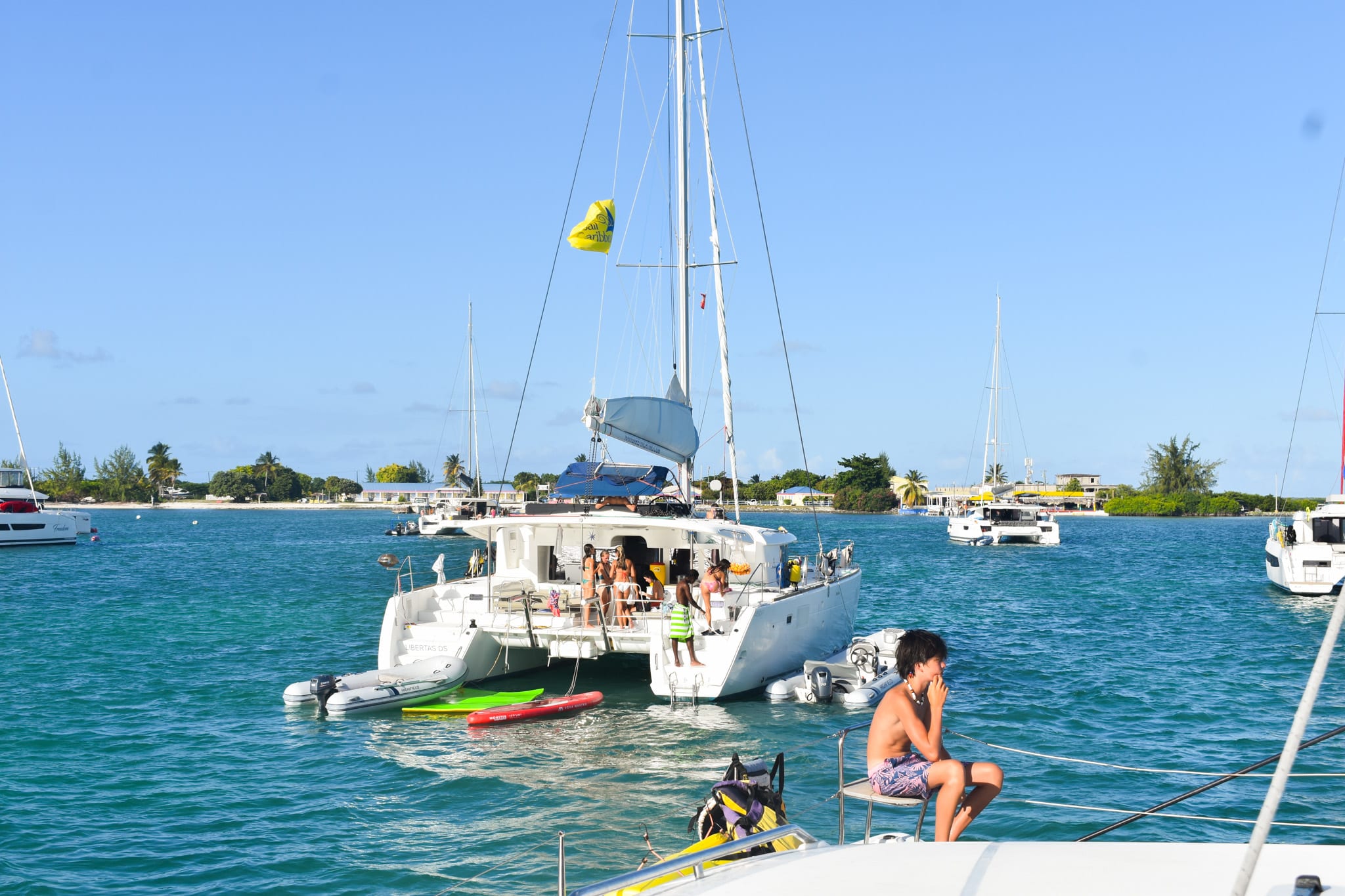
- Life on a sailboat offers unmatched freedom, constantly changing views, and a community that grows closer with every mile sailed together.
- The boat's interior is for essentials; the real living space is outside, offering a campground stretching to the horizon.
- Many students choose to sleep on deck under the stars, an unforgettable experience with fresh sea breezes and ocean sounds.
- Cooking on a sailboat is a shared experience, where meal prep becomes teamwork and naturally brings the crew together.
- Boat showers, using a saltwater wash and freshwater rinse, teach eco-conscious living and resource conservation.
Sail Caribbean is a summer camp but not the kind where you roll out a tent and grab marshmallows for the fire pit. Most summer camps stay rooted in one place, with cabins that never move. Sail Caribbean is different. Here, your “cabin” moves with you, day and night.
On our programs, you don’t just visit the Caribbean Sea, you live on it. Trading square footage for open water, campers call a sailboat home as it travels across the Caribbean Sea. While land-based camps offer comfort and routine, life on a boat offers unmatched freedom, constantly changing views, and a community that grows closer with every mile sailed together.
The World is Your Living Room: Reframing “Cramped” Spaces
Living on a sailboat might sound cramped. After all, you’re sharing a small space with your friends, crewmates, and captain. But that close living arrangement is actually one of the reasons Sail Caribbean creates such strong communities!
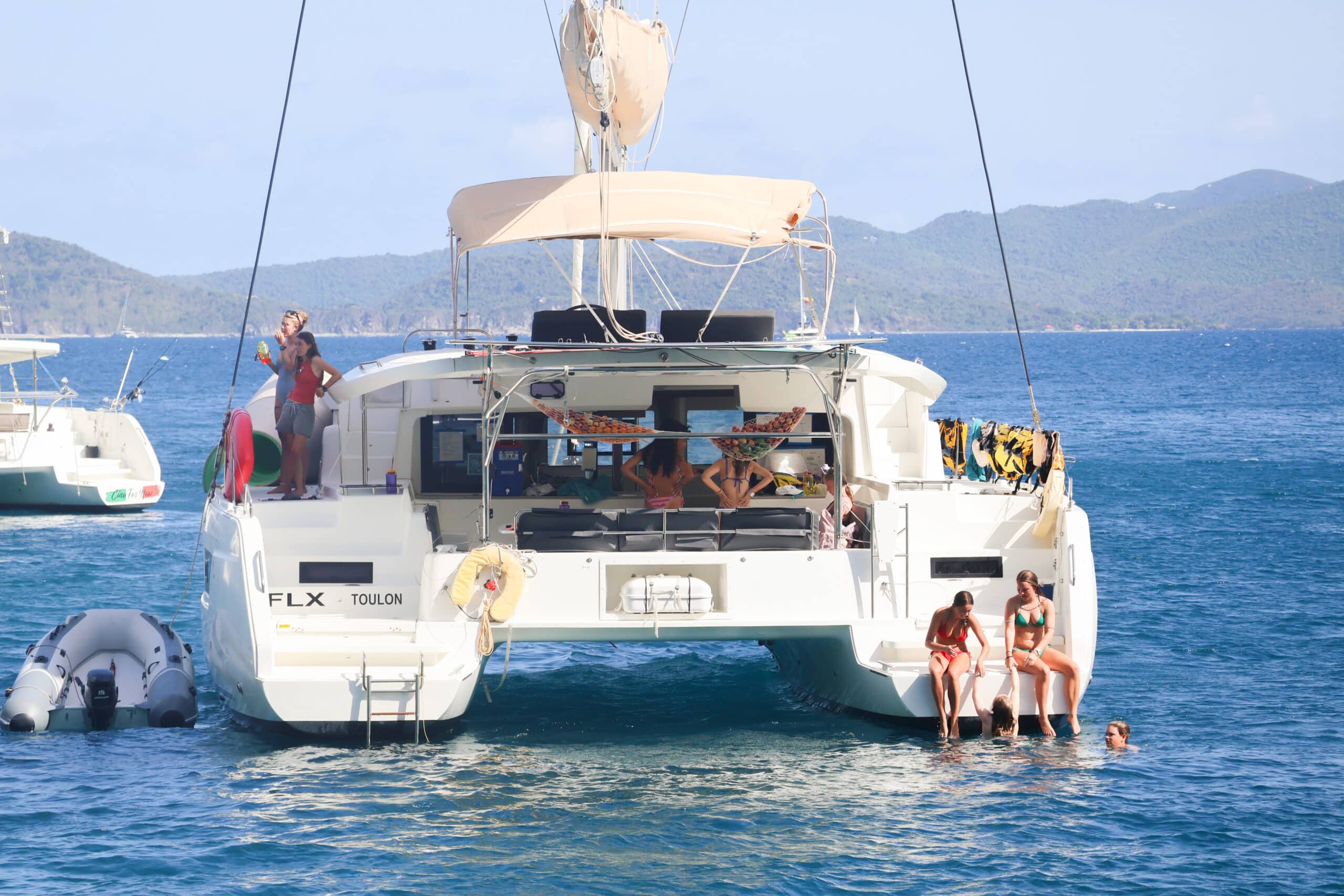
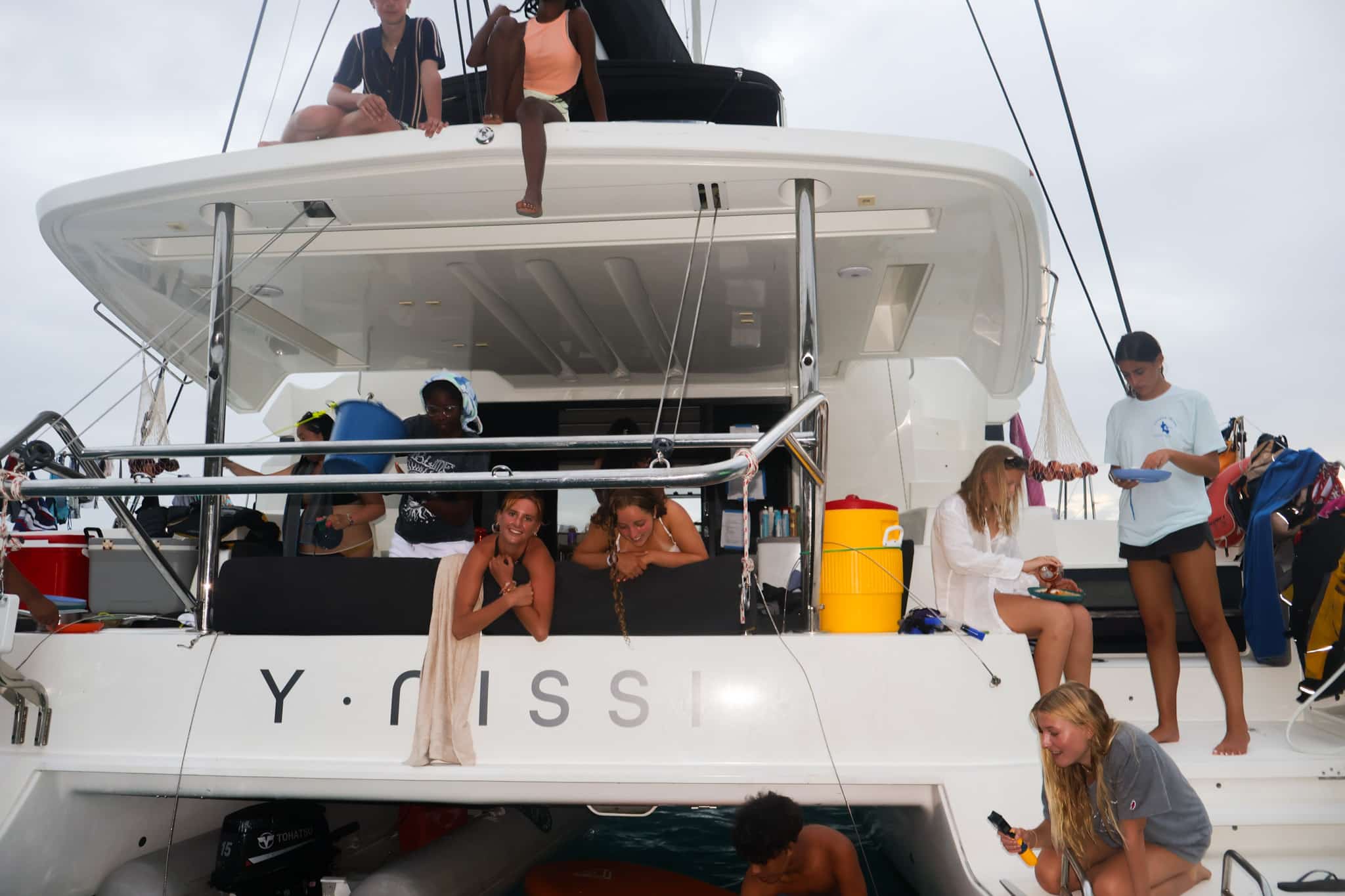
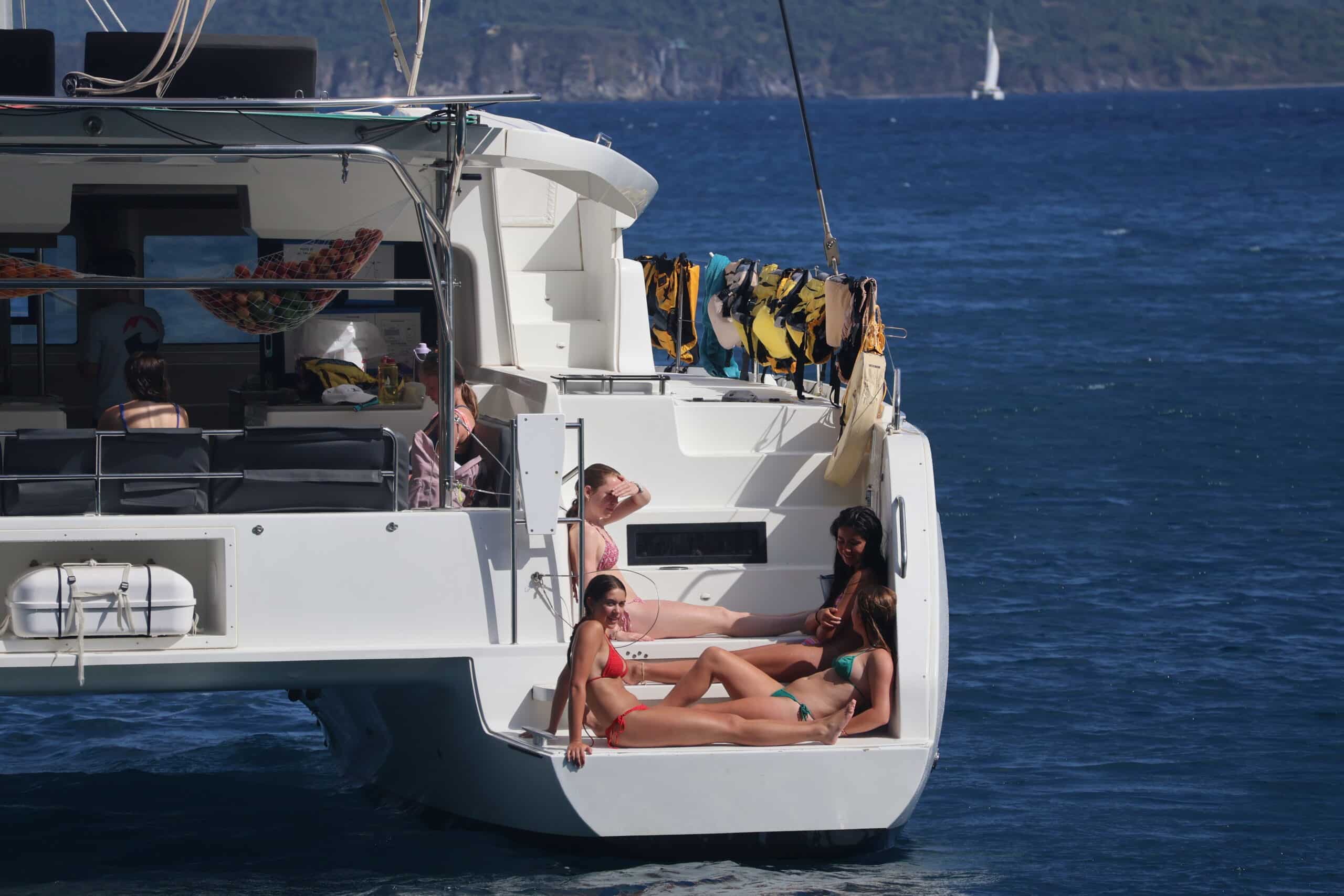
Life on a boat is an ‘inside-out’ lifestyle. The interior is mostly for cooking, changing, and sleeping. The real living space is outside, in the cockpit, on the deck, and in the ocean.
Life on a sailboat keeps you outside just about all of the time. Sailing, eating, swimming, and relaxing all happen in the open air. The trade-off for a smaller bedroom is a campground that stretches all the way to the horizon and a shared space that teaches responsibility and how to live alongside others.
Sleeping Arrangements: Cabins vs. The Stars
Below deck, cabins are efficient and thoughtfully designed. There are full beds, storage cabinets, and bathrooms, and everything has a specific place. Living below deck teaches organization and tidiness, because this shared space only works when everyone takes responsibility for their gear. Some students prefer sleeping below deck for the quiet, the comfort, or the sense of routine after a full day on the water.
Above deck is where the experience becomes unforgettable. The majority of students choose to sleep outside, in the open air, under the stars. Whether it’s on cockpit cushions, in sleeping bags, or stretched out in a hammock, sleeping on deck removes the feeling of being cramped. There’s always fresh sea breezes, the sound of the water around you, and stars above your head. This outdoor experience usually contains the students’ favorite moments and something campers talk about long after they’re home.
The Galley vs. The Cafeteria: Cooking as a Crew
Land Camp: Lunchtime at a traditional summer camp usually means a large and loud dining hall. It’s familiar, fast-paced, and mostly hands-off.
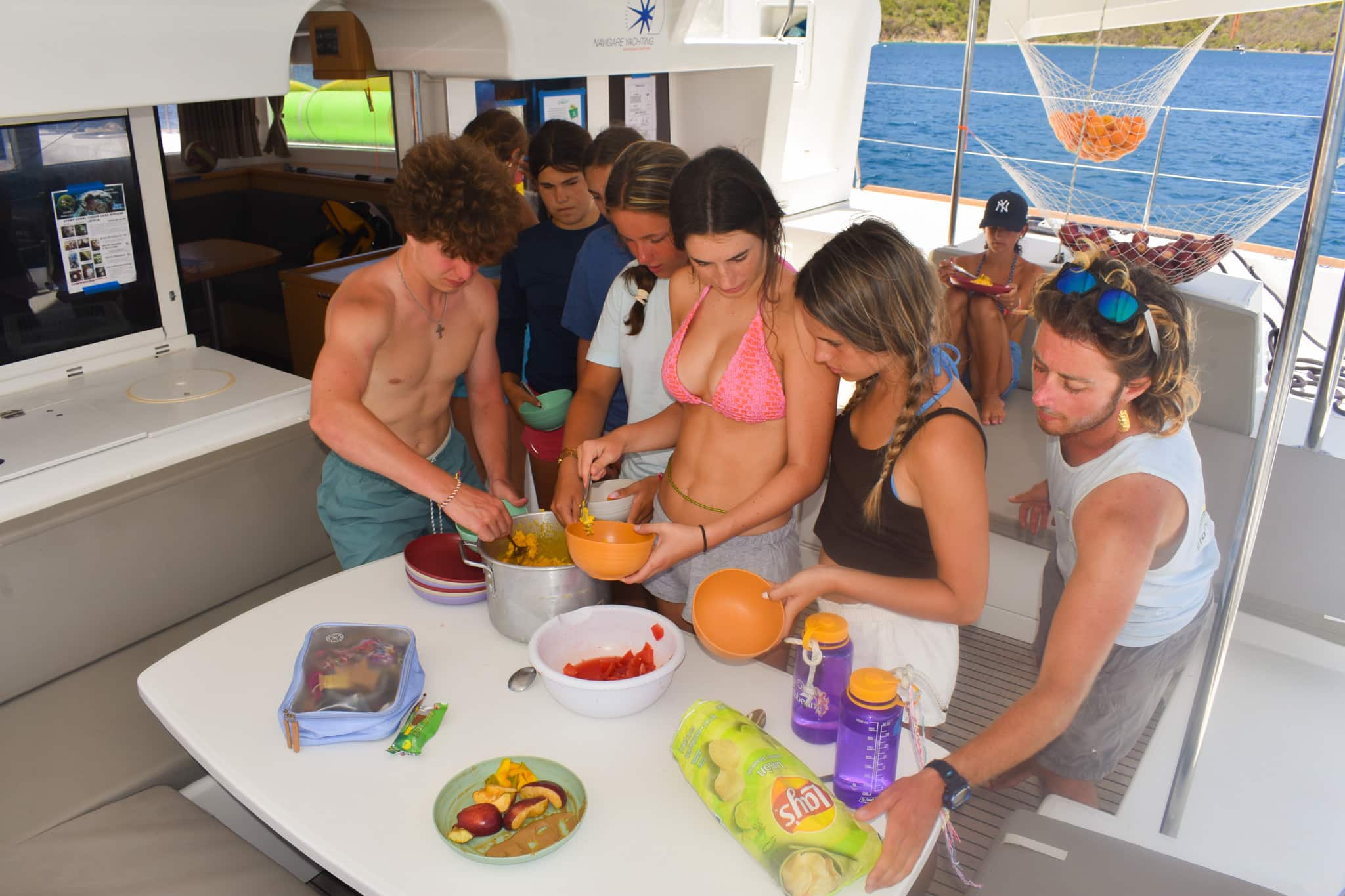
Living on a Sailboat: On a sailboat, lunch looks completely different. At Sail Caribbean, campers cook with their friends in the galley, the boat’s kitchen. Meal prep becomes a shared experience, with everyone pitching in to chop, cook, set up, and clean. The smaller space naturally brings people together, turning everyday meals into teamwork.
Hygiene and Facilities: The Reality of Boat Showers
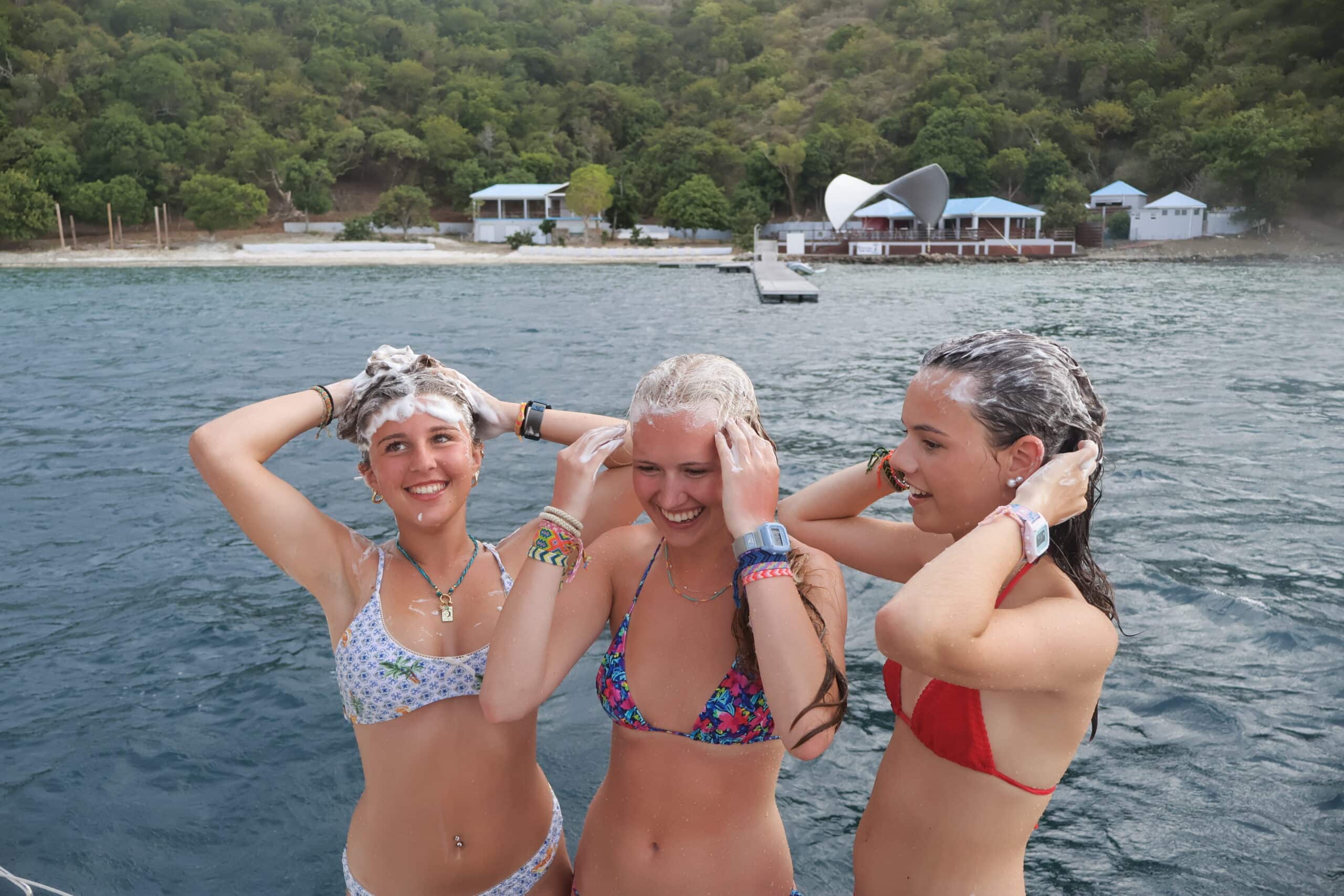
Boat showers are definitely different from what you’d find at a land camp, and that’s part of the adventure! While traditional camps have cabin showers, sailboats are designed for efficiency. On board, bathrooms are called heads, and every drop of freshwater matters.
Most days, campers use the classic saltwater wash, freshwater rinse method. That means hopping into the ocean off the back of the boat with a shower caddy—soap, shampoo, and conditioner in hand. The ocean does the main cleaning, and at the end, everyone gets a quick freshwater rinse (usually about 30 seconds) to wash away the salt.
It’s not always glamorous; instead, it’s a lesson in eco-conscious living. Campers quickly learn how to conserve water, respect shared resources, and appreciate what they have. By the end of the program, what once felt unfamiliar becomes second nature and becomes one of those sailboat stories campers love to tell.
Why Close Quarters Create Best Friends
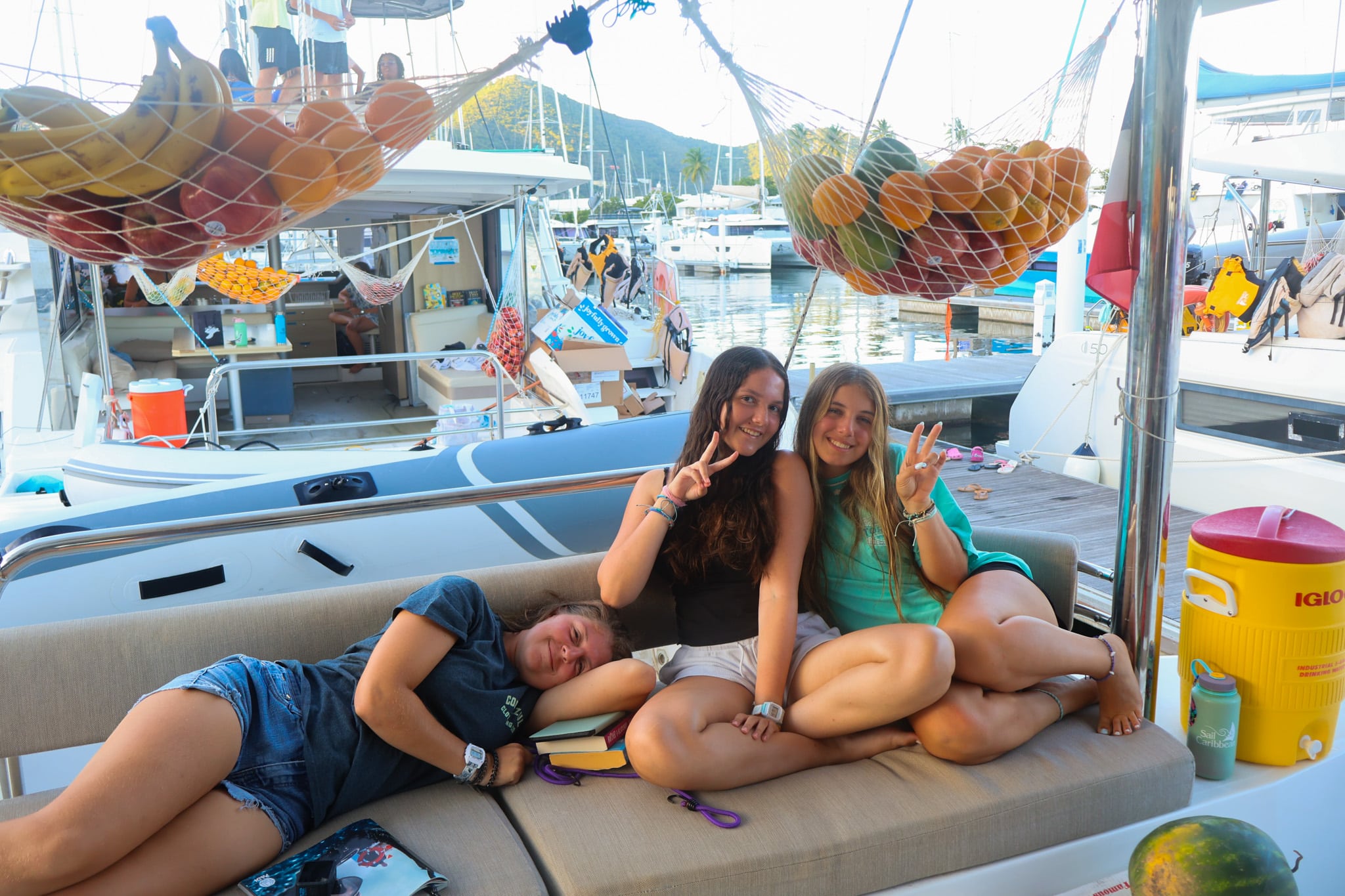
Living on a sailboat changes how people connect. Unlike a traditional camp cabin, there are no bunkbeds to hide behind. Life on a boat puts everyone in close proximity, which naturally encourages communication and conflict resolution.
The people on your sailboat are the friends you are learning new concepts every day. Because you’re sharing space all day, sailing, cooking, navigating, and problem-solving together, campers quickly learn how to talk things through problems together. The result is friendships that form incredibly fast. Bonds that might take two weeks to develop at a land camp often form in just a couple of days on a boat.
View from the Window: Waking Up Somewhere New
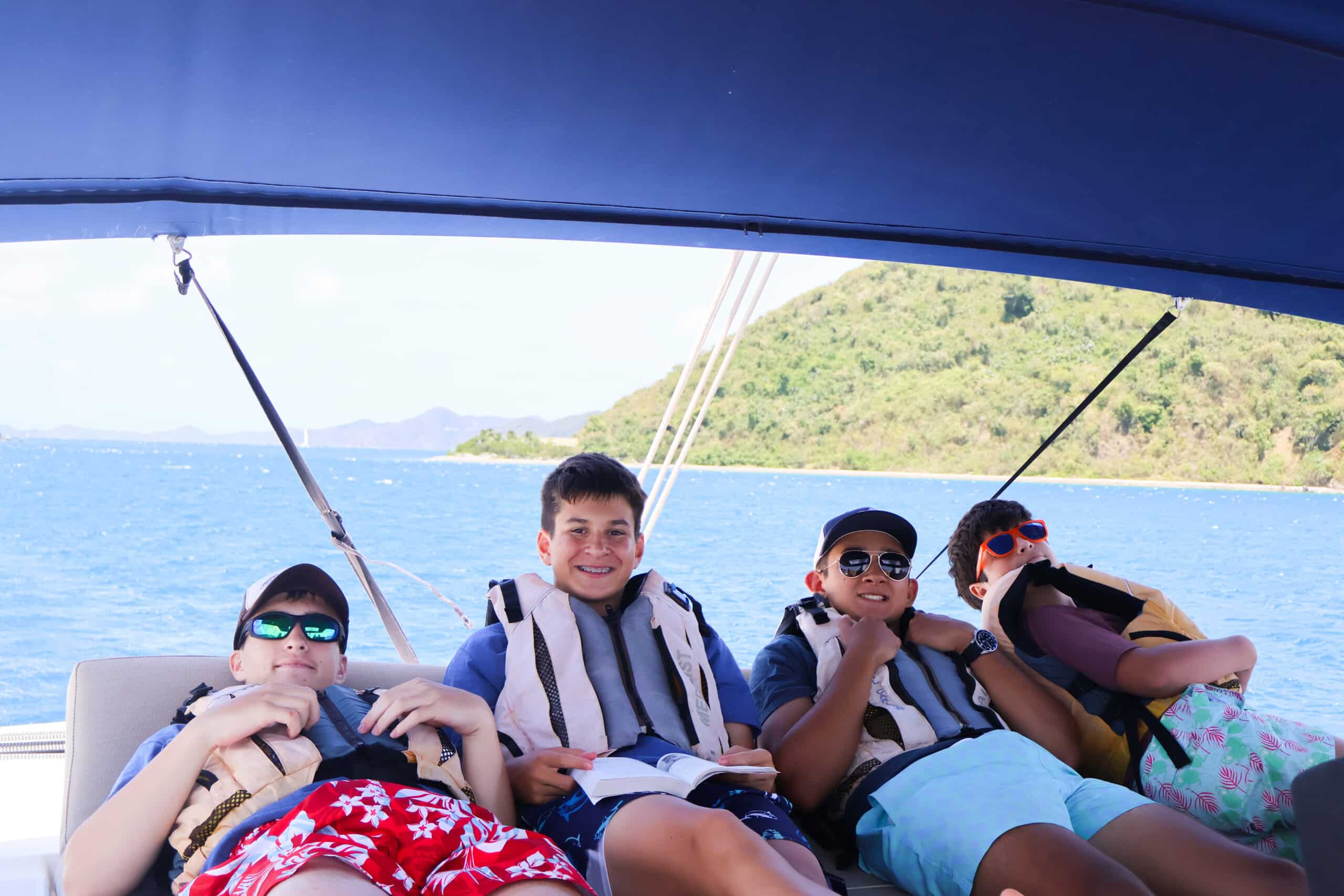
Waking up to your body gently swaying, the sun glinting off the water, and your eyes opening to endless shades of blue is one of the most surreal feelings at sea. Moments like these make every challenge of boat life worth it, and they’re something land-based camps can’t begin to compare to.
At Sail Caribbean, you often fall asleep anchored in one quiet bay and wake up ready to sail to another. The scenery is never the same two mornings in a row. Your “window” might look like one beautiful scene one morning and a totally different one the next.
Trade Space for Adventure
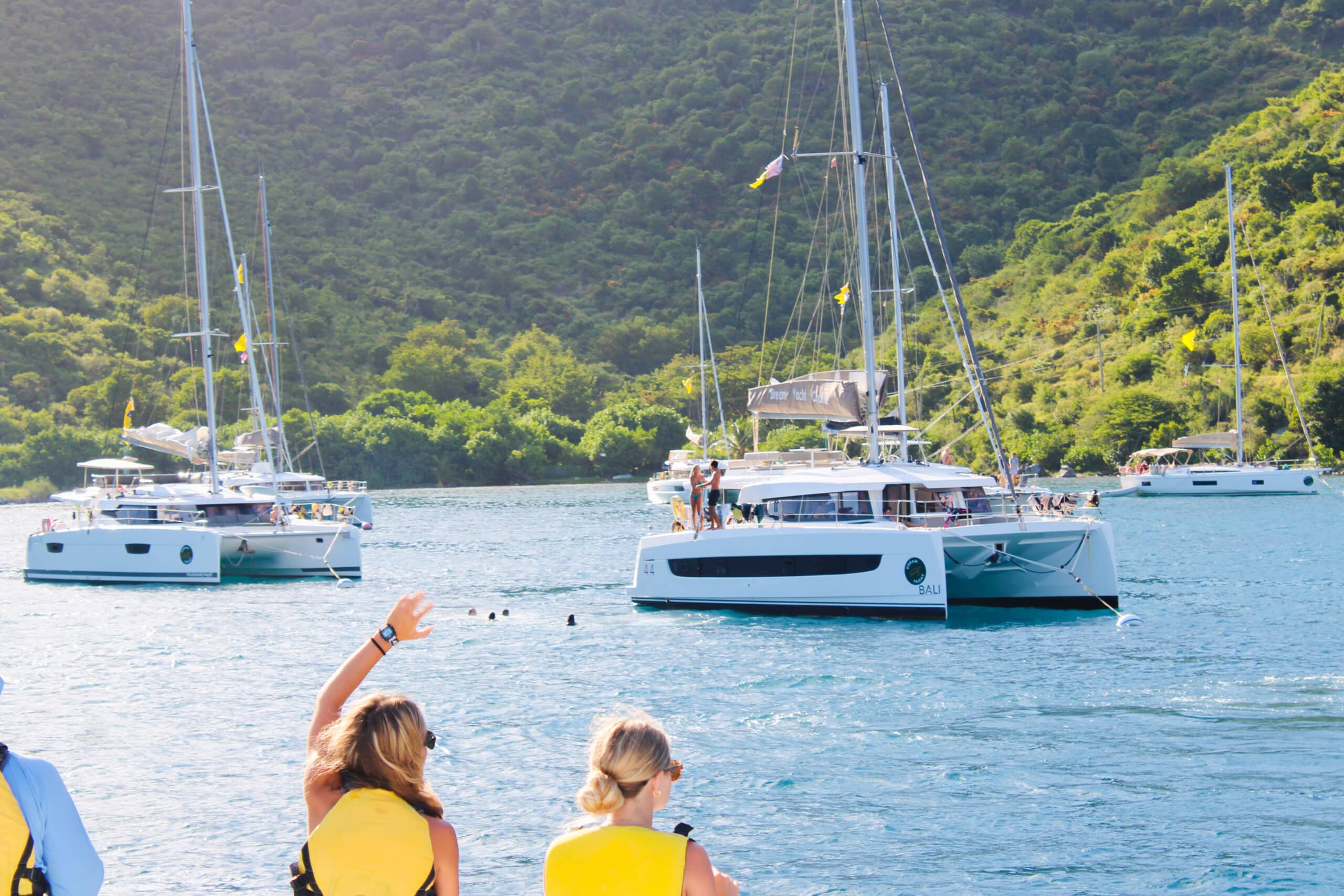
Traditional camps in the woods offer wide-open spaces and familiar routines. Sailing camp trades the forest for the open sea, and with it comes a different kind of growth. Living on a boat means learning by doing: applying science in real time, earning sailing or diving certifications, sharing responsibility with a closely bonded crew, and contributing to a community that has to work together every day. It’s active, engaging, and genuinely fun, with each day shaped by weather, teamwork, and where the boat can take you next.
Frequently Asked Questions
The majority of our students come on their own, though friends are certainly welcome. Requests to be on the same boat as a friend can be accommodated if both friends make the request. We do limit the number of teens who know each other on the same boat.
Our voyages combine the best of small and large group qualities. Each boat has students of similar age, ensuring an intimate, experiential learning and living environment onboard. Each crew bonds as a close unit. The boats in each program also sail together as a fleet. Our fleets have from two to five boats, with 20-50 students. For ages 12/13-18, our fleet size is 20 to 50 teenagers with 10-12 students of similar age aboard each boat and a balance of girls and boys. Students form the closest friendships with the peers of their crew as they learn, work and play together. But there are many opportunities to socialize with all participants on the trip (and even other fleets) during watersports and land activities.
We sail in fleets for safety and instructional purposes, and also for the fun and social opportunities it provides. Our Mates rotate from boat to boat on a regular basis, each sharing his or her own unique knowledge and enthusiasm for sailing, navigation, scuba, marine biology, and cooking, the list is endless. Ashore, the crews gather to enjoy newfound friendships, various ages, and backgrounds, and news about how each boat is meeting its challenges. And of course, there’s the excitement of yacht racing. There’s nothing quite like a fleet of large yachts tacking upwind together!
On land, safety continues to be our highest priority. In every case, students are given clear boundaries (and the attractions and highlights within those boundaries so students are not tempted to stray). During daytime excursions, our staff members wear their staff shirts and join the students ashore to provide area supervision throughout the designated areas and particularly at points of interest. Students must travel in buddy groups and check in on a regular basis. During evenings ashore, students and staff are together at all times. The venues are carefully chosen for the student’s enjoyment and with foremost consideration for safety and supervision.
On the boat, there are always at least two, and sometimes three, adults onboard for 10-12 students when the boat is underway. A support staff boat may also accompany our BVI and Leeward Island fleets, providing a “main office” for the Program Director, Fleet Captain, Provisions Manager, and Medical Officer, as well as carrying additional supplies and equipment. These additional staff normally sail with the students each day, rotating through the fleet. Our overall student-to-staff ratio in all programs is 4:1.


