

Graceful Gliders: Exploring the BVI’s Ray Sanctuary from a Sailboat
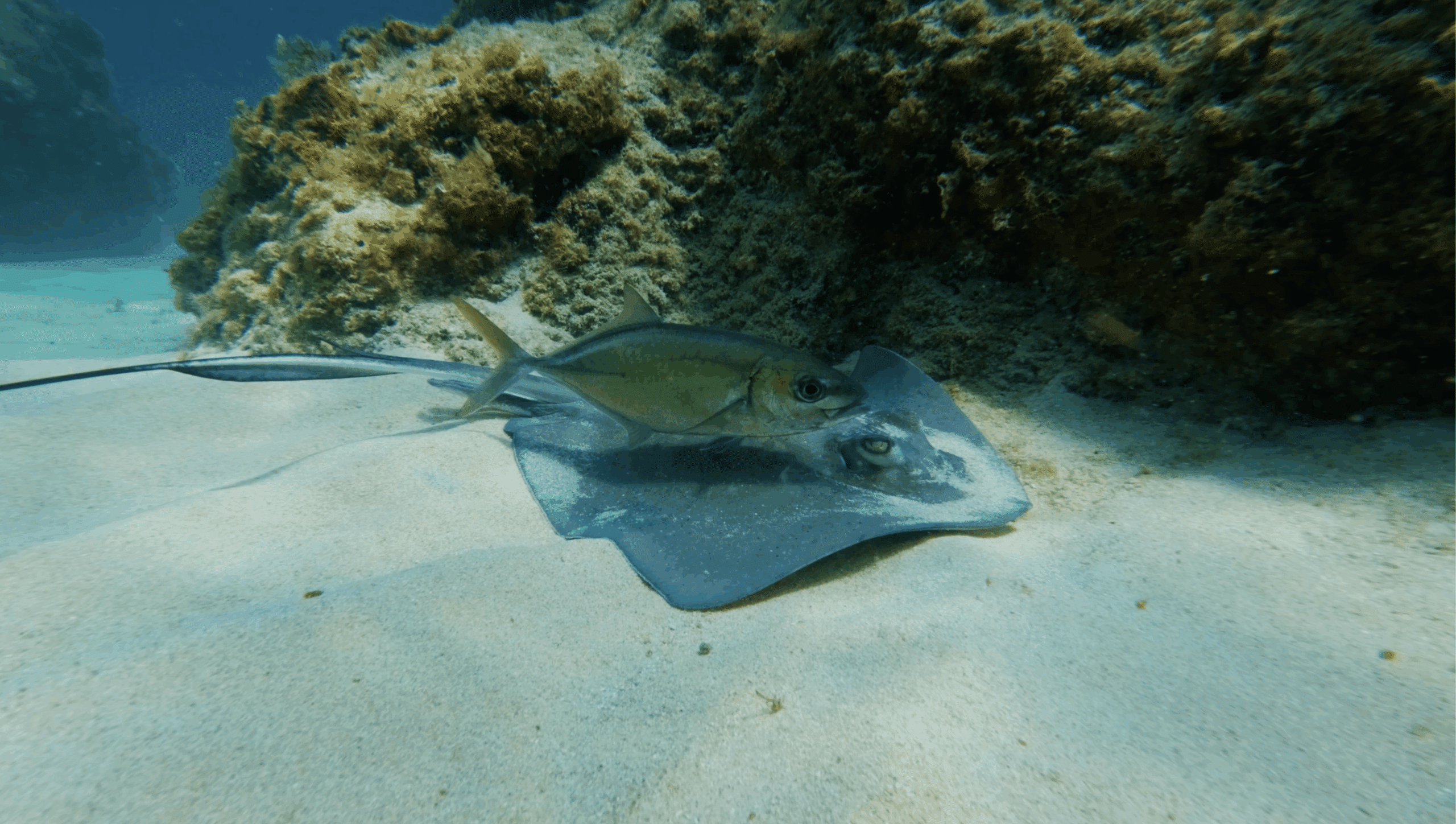
- Exploring the British Virgin Islands' ray sanctuary from a sailboat allows for quiet, minimal disturbance observation of these graceful gliders.
- The BVI sanctuary is home to diverse ray species, including Spotted Eagle Rays, Southern Stingrays, Yellow Stingrays, and occasionally Manta Rays.
- Sailing provides an optimal way to experience the sanctuary, as quiet vessels avoid disturbing rays and allow for natural observation in secluded anchorages.
- Interacting safely with rays involves mindful movement, like the stingray shuffle, and avoiding touch to protect their vital mucus layer.
- Rays are crucial to marine ecosystems, acting as habitat engineers and balancing the food web, highlighting the importance of their preservation.
Written by Bronte M., Marine Science Coordinator
wpsummarize_shortcode_call- Exploring the British Virgin Islands' ray sanctuary from a sailboat allows for quiet, minimal disturbance observation of these graceful gliders.
- The BVI sanctuary is home to diverse ray species, including Spotted Eagle Rays, Southern Stingrays, Yellow Stingrays, and occasionally Manta Rays.
- Sailing provides an optimal way to experience the sanctuary, as quiet vessels avoid disturbing rays and allow for natural observation in secluded anchorages.
- Interacting safely with rays involves mindful movement, like the stingray shuffle, and avoiding touch to protect their vital mucus layer.
- Rays are crucial to marine ecosystems, acting as habitat engineers and balancing the food web, highlighting the importance of their preservation.
The crystal-clear waters of the British Virgin Islands are teeming with life, from coral reefs and seagrass beds to mangroves and open ocean. These environments are home to the ocean’s most unique creatures – rays. Rays glide through shallow sandy flats and reef edges, using these protected habitats to feed and rest.
In 2014, the BVI became a shark and ray sanctuary, protecting over 23 species that inhabit these waters. Exploring the sanctuary from a sailboat allows us to move quietly through their environment, slipping into the water with minimal disturbance to observe these “graceful gliders” in their natural home.
Manta, Eagle, or Stingray? Know Your Rays
Rays may look like “sea pancakes,” but they are actually cartilaginous fish. Their skeletons are made of cartilage, the same flexible tissue in our noses and ears. Rays are also defined by their flattened bodies and wing-like pectoral fins, which let them glide effortlessly through the water.
The BVI is home to several ray species, many of which you can see while snorkeling or diving during a Sail Caribbean voyage:
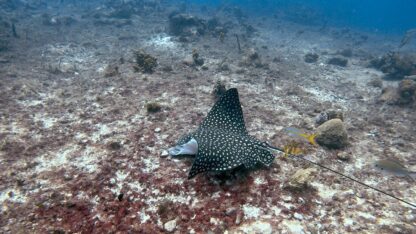
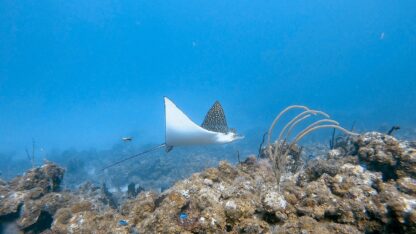
- Spotted Eagle Rays: Dark backs with bright white spots and a bird-like beak. These rays often cruise near the surface and sometimes leap from the water!
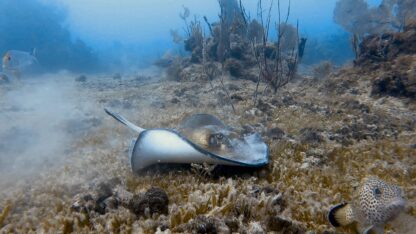
- Southern Stingrays: Flat, round, and dark, usually resting on sandy sea floors. When startled, they may flap their “wings” to bury themselves in sand.
- Yellow Stingrays: Small and well-camouflaged, found in seagrass beds and rocky reefs. Their timid nature makes sightings special.
- Manta Rays: Rare deep-ocean visitors, occasionally surfacing at night to feed on plankton and may be attracted to boat lights.
Where to Find Rays in the BVI
The oceans around the BVI are all a sanctuary for ray species, you might never know when you will encounter one at Sail Caribbean. A stingray could appear during a ‘Night Adaptations walk’ around the Scrub Island Docks, or you might be greeted by a fever of Spotted Eagle rays (yes, a group of Rays is called a ‘fever’) during a morning Scuba Dive!
North Sound, Virgin Gorda is a known hotspot for these spotted eagle rays, particularly around its extensive seagrass beds. As you sail through this area, keep an eye on the surface. These majestic rays are often seen gliding in groups as they move between islands. For more benthic (bottom-dwelling) rays,
Anegada offers some of the best chances for sightings. Its shallow sand flats, creeks, and fringing reefs provide ideal conditions for southern stingrays, including important nursery areas where young rays find shelter and protection.
The Advantage to Exploring a Ray Sanctuary by Sailboat
Sailing is the best way to experience a ray sanctuary. Rays and other wildlife are sensitive to noise and sudden movement, and loud motorboats can disturb their natural behavior. Sailboats move quietly, allowing rays to glide across sand, forage along reefs, and cruise seagrass beds naturally. Sail Caribbean vessels often anchor in secluded bays away from crowded routes. These calm anchorages, with coral reefs and sandy flats, are ideal for spotting rays during early morning swims, afternoon snorkels, or quiet sunset dips.
How to Interact Safely with Rays
Rays are known for being docile and peaceful animals. Despite the word “sting” in their name, instances of stingrays causing harm to humans are extremely rare. A ray’s barb is used only as a defensive response, typically if it feels threatened or is accidentally stepped on. When exploring shallow sand flats or mangrove creeks, students learn a simple safety technique known as the stingray shuffle. By gently shuffling your feet along the sand rather than taking big steps, rays are alerted to your presence and have time to swim away safely.
Just as it is important to avoid startling rays, it is equally important not to touch them. Rays have a protective mucus layer covering their skin. This slimy coating helps protect them from bacteria, parasites, and infection, and also reduces drag as they move through the water. Touching a ray can remove this layer and negatively impact their health.
By observing rays calmly, keeping our distance, and moving mindfully in their habitat, we can ensure these encounters remain safe, respectful, and memorable for everyone involved.
The Role of Rays in the Ecosystem
Rays play essential roles in maintaining healthy marine ecosystems. Bottom-dwelling rays, like stingrays, are habitat engineers: their sediment-stirring behavior oxygenates the sea floor, recycles nutrients, and creates microhabitats for other organisms.
All rays help balance the marine food web by controlling populations of smaller invertebrates. Spotted eagle rays also provide transport and shelter for small hitchhiking species like remoras, adding another layer of biodiversity to their ecosystem.
At Sail Caribbean, marine biology and conservation education are integrated into every voyage, helping students understand why preserving rays and their sanctuaries is crucial for ocean health.
Experience the British Virgin Islands’ Ray Sanctuary Firsthand
Exploring the BVI with Sail Caribbean allows you to experience swimming alongside these prehistoric and iconic creatures in their natural home. Our summer programs are built around these moments, living aboard sailboats, exploring protected marine environments, and experiencing wildlife in a way that prioritises respect, education, and connection.
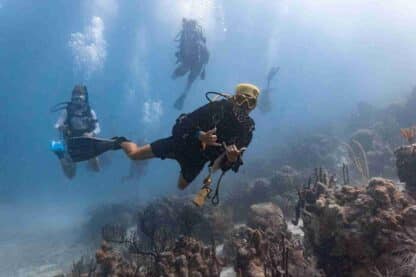
We offer experiences onboard sailing vessels, snorkelling in unforgettable ecosystems, expanding your understanding through marine biology lessons, and immersing yourself in a ray’s world while scuba diving with Sail Caribbean Divers.
Want to dive in? Our sailing camps offer daily opportunities to snorkel and explore the BVI’s incredible marine sanctuaries. Check out our Sailing Summer Camp itineraries.
Frequently Asked Questions
Not at all! Rays are generally gentle and timid. Whilst stingrays have a venomous barb, injuries are rare and often stem from accidental stepping rather than aggression (hence ‘The Stingray Shuffle’).
Manta Rays, whilst very cool, are a rare (but not impossible) sighting in the BVIs. Ray excitement is commonly centred around the mesmerising Spotted Eagle Ray or the Southern Stingray. Book a trip with Sail Caribbean Divers on your next vacation to the BVI!
Rays have a year-round presence in the BVIs, so you could encounter one at any time. In the summer months, you may be more likely to come across stingrays in shallow, sandy areas.
Yes! Our programs offer daily snorkeling and diving opportunities across BVI ray sanctuary. Check out our Dates & Costs!

