
Marine Biology

Marine Biology with Sail Caribbean is serious fun!

Join the esteemed worldwide community of marine scientists!  On all our programs, you'll be surrounded by the perfect Marine Biology classroom – clear blue water and coral reefs teeming with extraordinary sea creatures and plant life.  On our Alpha, Bravo, Charlie, Delta and Echo programs, you'll have the opportunity to learn and explore that underwater world by participating in Marine Biology seminars.  More ambitious?  On Sierra, Foxtrot and Tango, Marine Science is part of the core curriculum.  And you can take your marine studies deeper by pursuing academic credit through your school's independent study program on our Sierra programs. Marine ScienceWhether you're simply curious or you're looking for academic credit, Marine Biology with Sail Caribbean is serious fun!

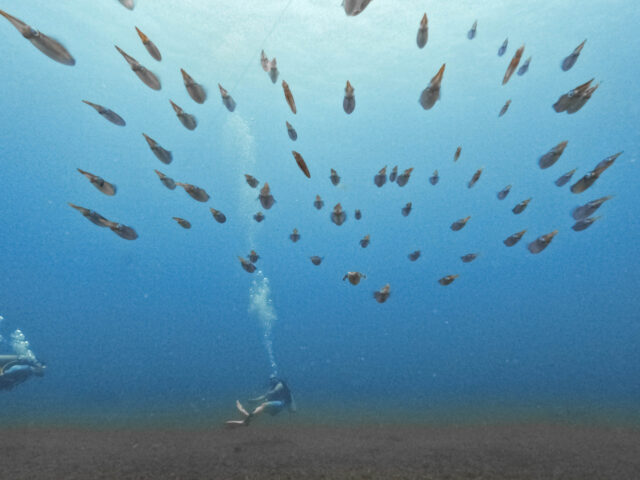
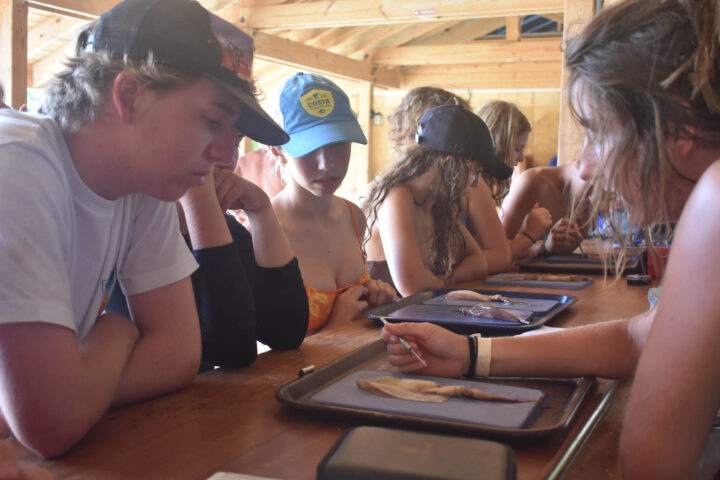
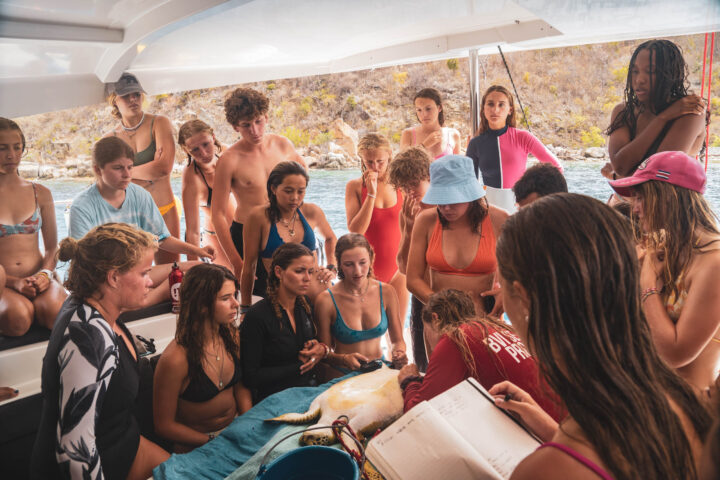
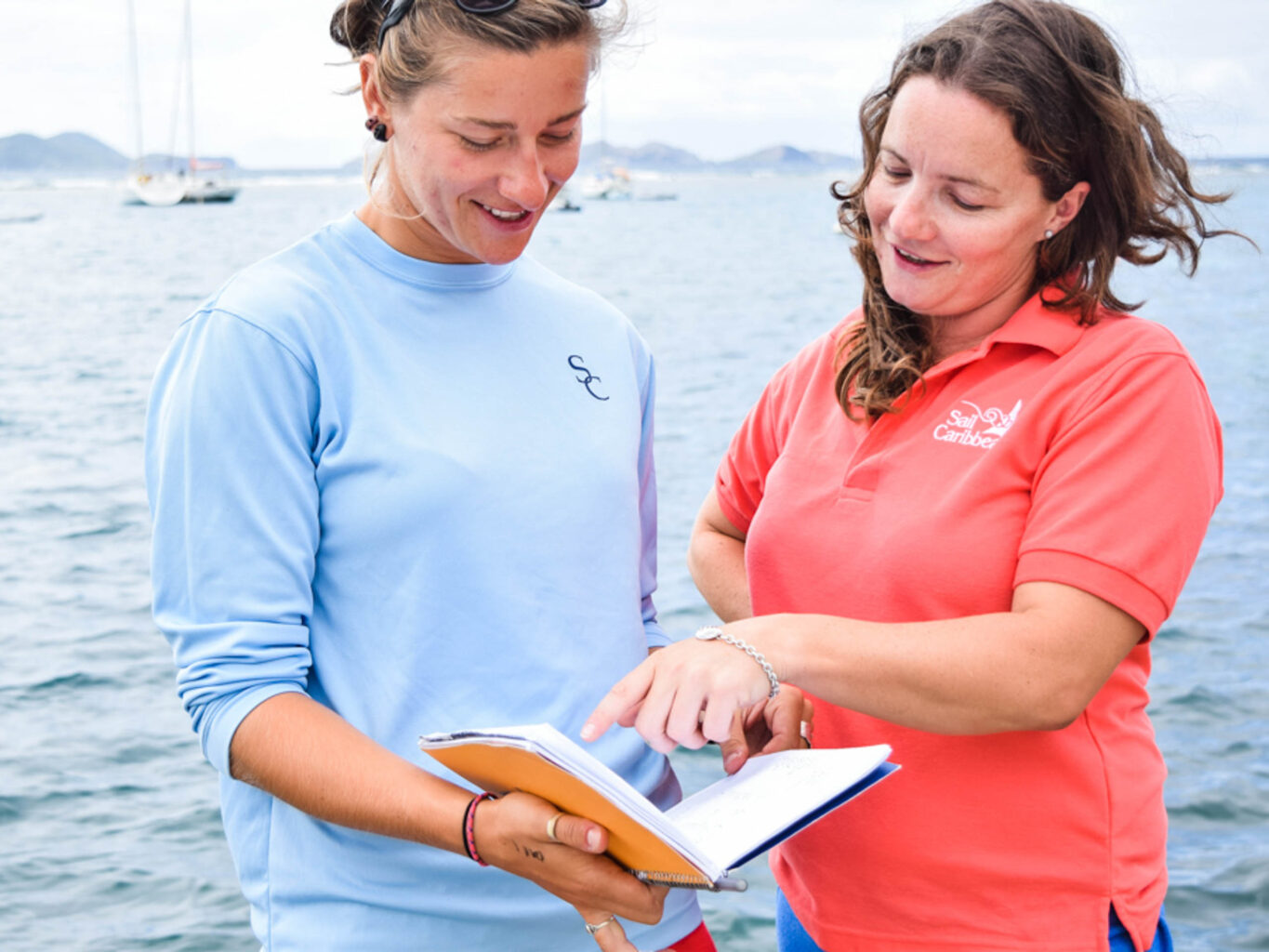
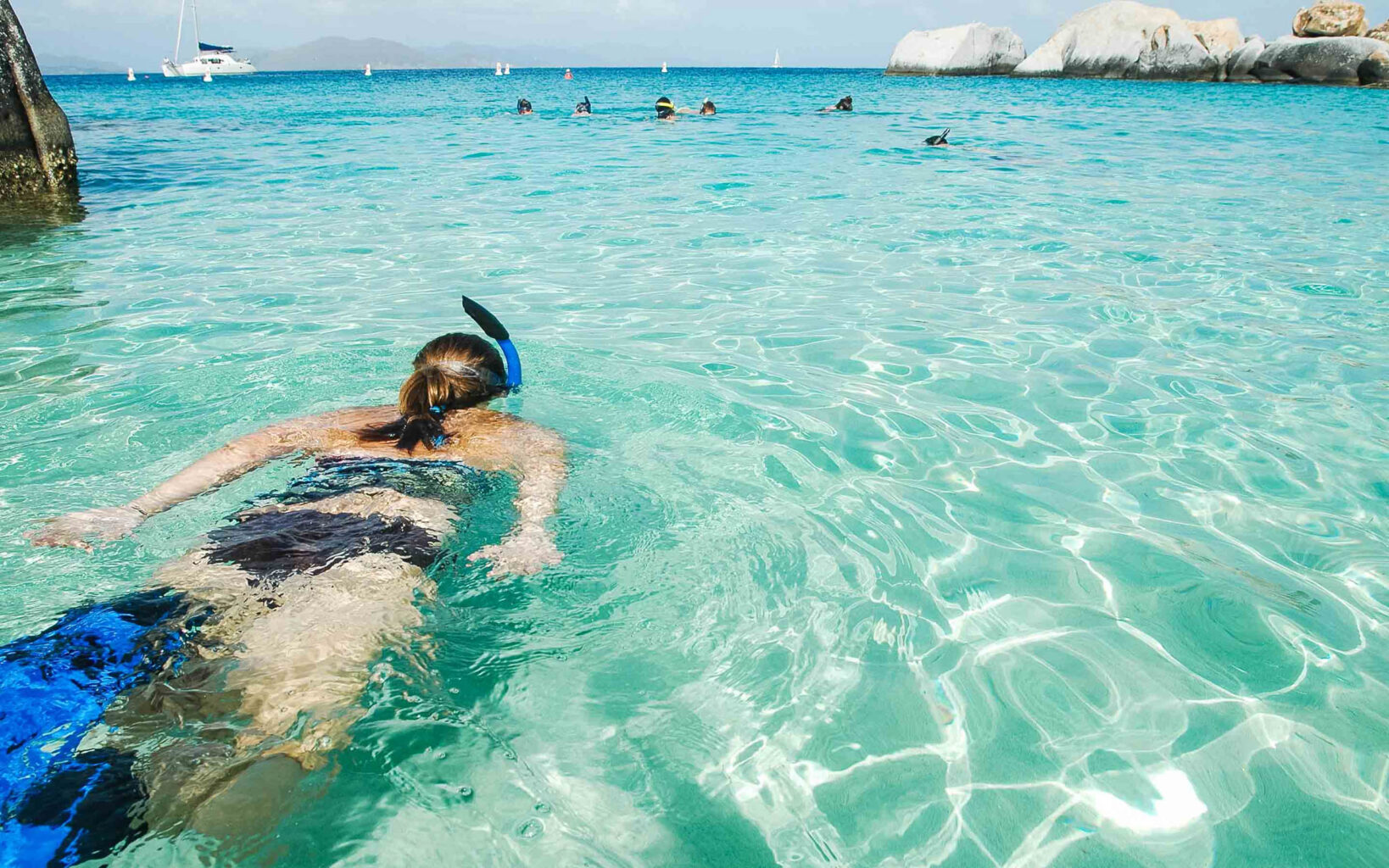
Do you ever look into the water and say "WHAT is that?" or "WHY does that happen?" A Sail Caribbean Voyage is your chance to have a better understanding of our oceans. Our staff marine biologist will educate you and other students through hands-on, entertaining seminars 2-4 times a week. Topics of these seminars will be based on our curricula, Fringing Reefs of the British Virgin Islands and Guide to Marine Sciences of the Caribbean.  These topics will include coral reef biology, reef ecology, artificial reefs, fish identification, and others.  Guided night snorkels, beach hikes and collection workshops are all part of these stimulating marine science seminars.  Our seminars are built in and around the regular program activities so there's still plenty of time for beach days, watersports, and island exploration. At the end of your program, you will have a better understanding of the ocean and the interactions you have with it.
If you join Tango you’ll team up with Tortola’s Youth Empowerment Project (YEP) on marine biology initiatives. As a group we’ll collect data for Sandwatch, an organization that monitors beach ecology to determine erosion areas. You’ll also learn turtle biology and turtle monitoring procedures. After hearing about the history of Caribbean reef formations, we’ll assess local reef health using techniques developed by Coral Watch. We’ll teach you why seagrass is a vital habitat. You’ll collect data on its abundance and inhabitants, then report the findings to the BVI Conservation and Fisheries Department.

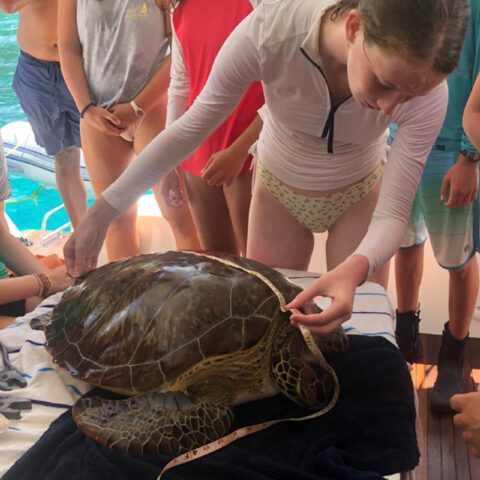
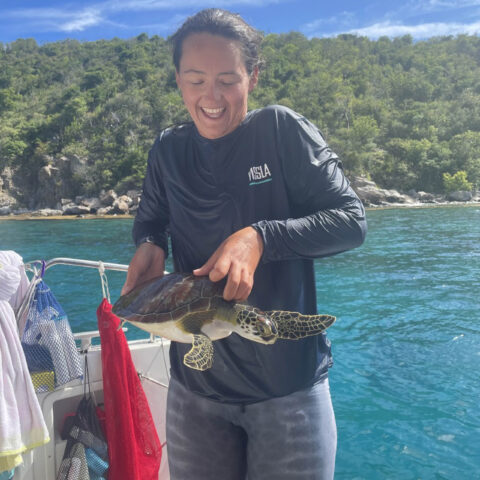
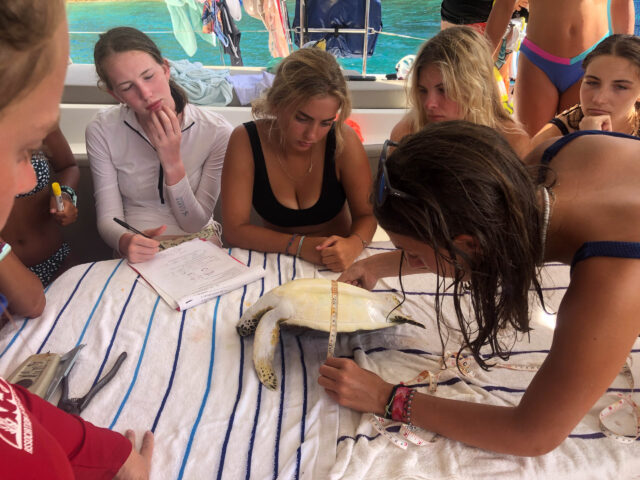
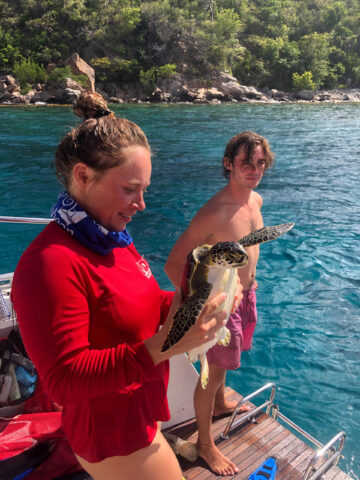
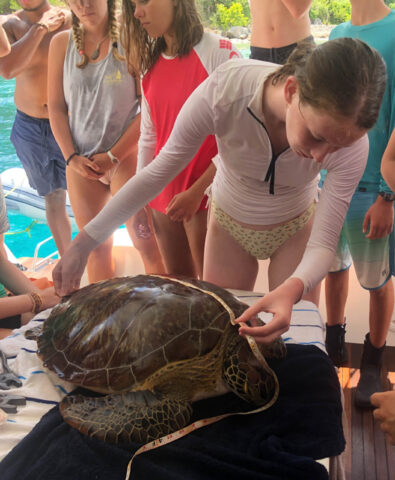
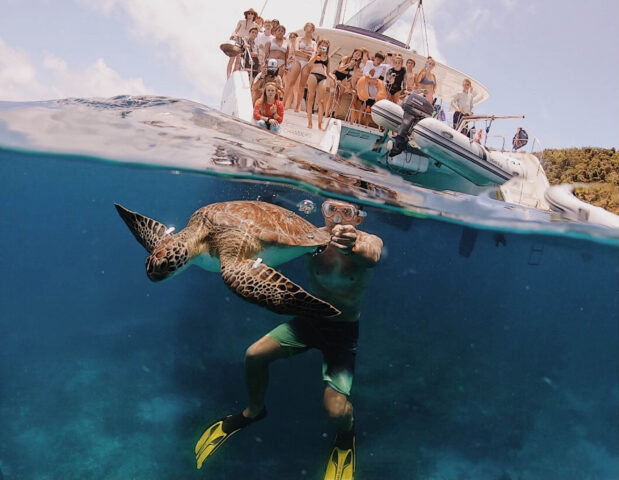
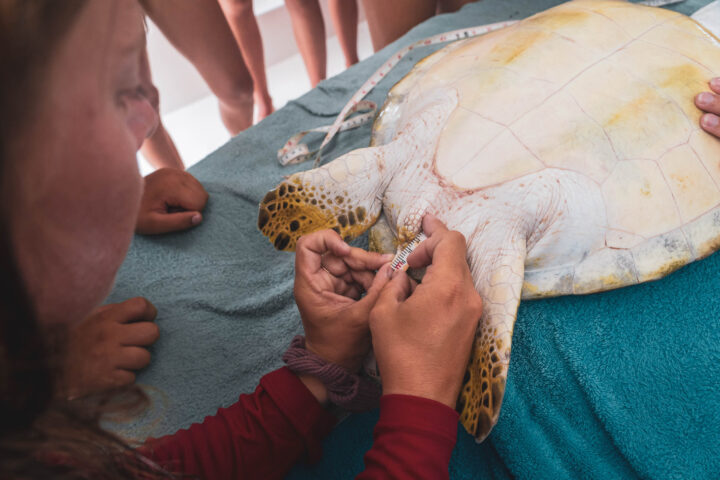
On Foxtrot programs you’ll learn turtle biology, the reasons why turtles are threatened, and the need for tagging and monitoring their populations. You will look for and catch sea turtles with the assistance of our trained staff members. Once caught, we’ll measure, scan for tags, and tag if necessary. All data is recorded and reported.
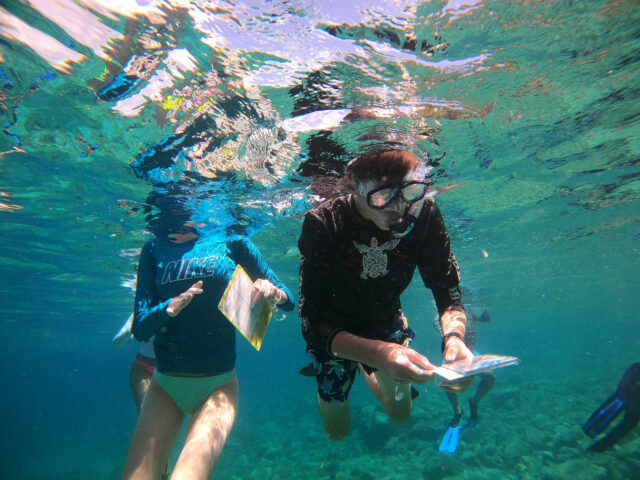
While snorkeling and adhering to the buddy system, you’ll assess reef fish populations around the BVI. Your data is submitted to REEF, made public via their website, and used by researchers, non-profits and government agencies worldwide.  Sandwatch, Coral Watch and seagrass studies round out the Foxtrot marine biology curriculum.

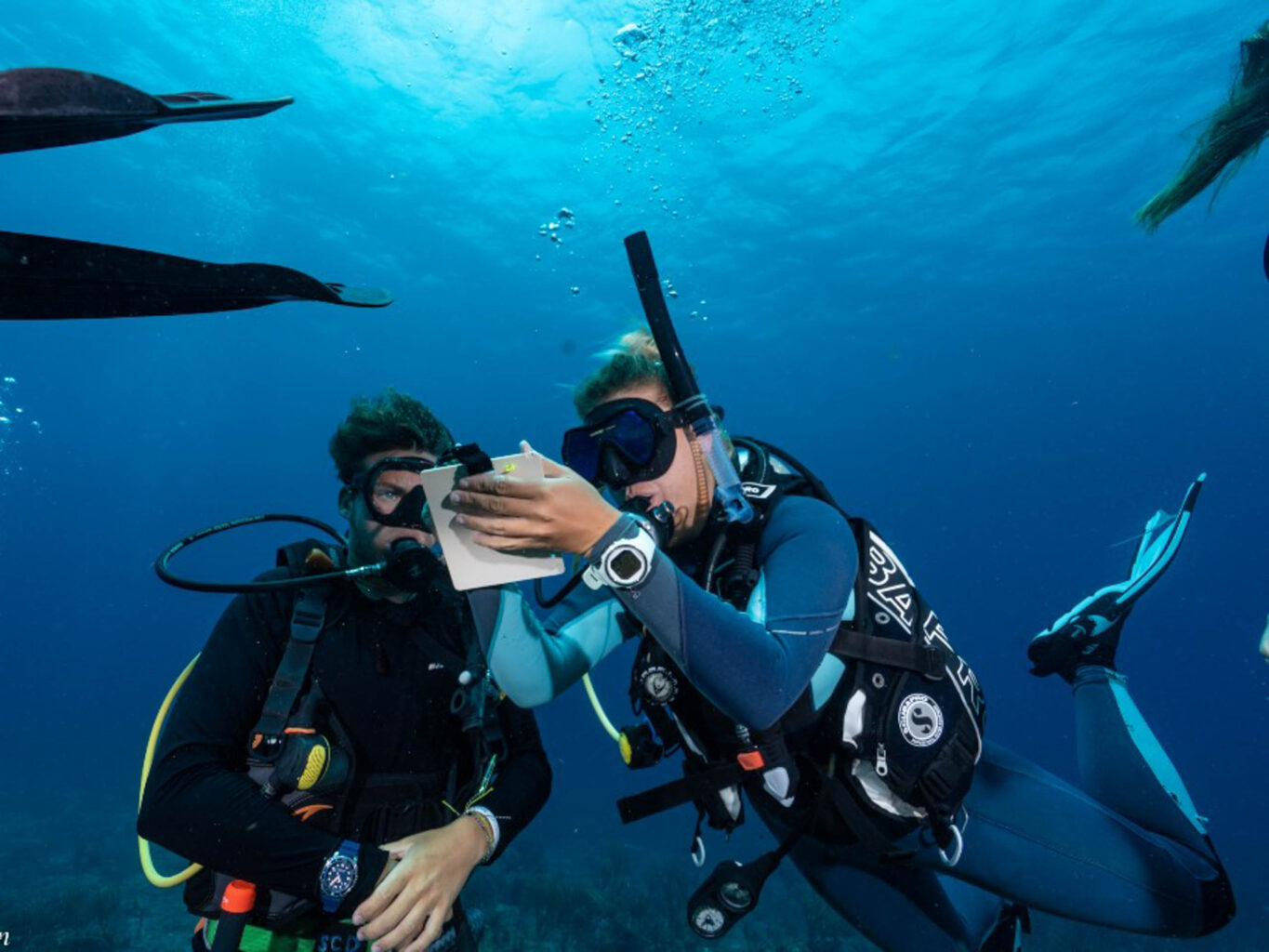
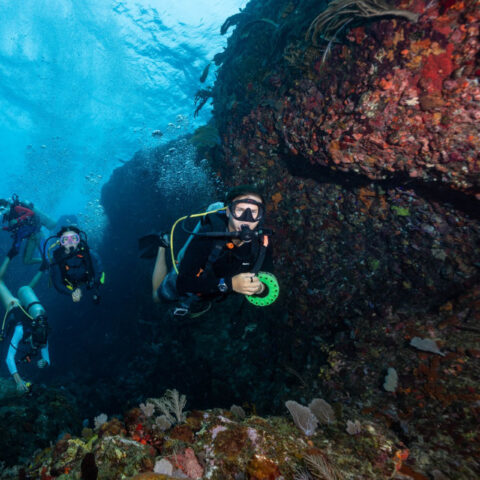
On our Sierra Tropical Marine Science for Divers program, you'll take a course in tropical marine ecology, including coral reef biology, marine science research techniques, fish identification, marine ecology and more. With your new skills, you'll perform vital research to help protect endangered marine species and their fragile ecosystems. Led by Sail Caribbean's marine biology instructors and experts from the BVI Department of Conservation & Fisheries, you'll earn academic credit through traditional (albeit island style) classroom discussions and then gets your hands "dirty" doing fieldwork on and in the water.

Sierra research projects may include:

Coral reef monitoring: Coral reefs are common to the crystal-clear waters of the BVI and they play an important economic role in maintaining local fish populations. You'll map and survey coral reefs monitor their current health and investigate trends in abundance by comparing your findings with prior yearss research.

Coastal restoration and rehabilitation: Mangroves are essential for preventing erosion and provide habitats for many species. You will measure the success of a restoration project by studying the regrowth of mangroves and sediment characteristics and plant new ones.

Additional research topics may be diurnal and nocturnal marine ecosystems, species diversity in fringing reefs and sea grass beds, and environmental impact assessments.  More projects may be identified as each summer nears, based on current events and the research of local marine experts.