

Summer Community Service: How to Earn Hours While Having Fun
- Service Learning combines education, environmental stewardship, cultural immersion, and outdoor adventure to build leadership skills and global perspective.
- Hands-on marine biology projects like turtle tagging and coral watch allow students to protect the blue planet and contribute to ongoing research.
- Cultural exchange activities, such as beach cleanups and working with local nonprofits, help students connect with the BVI community.
- Students can earn 15 to 30 verified service hours, depending on program length, receiving an official Sail Caribbean Community Service Certificate.
- Adventure-based service programs showcase leadership and global awareness on college applications, providing authentic stories for essays.
Summer community service programs give middle and high school students the opportunity to earn service hours while gaining real-world experience, exploring new cultures, and making a meaningful impact. While many teens associate community service with local cleanups or routine volunteer tasks, the best teen service programs go beyond basic requirements to offer hands-on learning and adventure. Instead of simply checking a box, students can earn high school service hours by participating in marine conservation projects such as sea turtle monitoring, coral reef restoration, and coastal environmental initiatives.
At Sail Caribbean, our programs are built around Service Learning — a combination of education, environmental stewardship, cultural immersion, and outdoor adventure. These experiences help teens build leadership skills, environmental awareness, and global perspective while completing meaningful volunteer work abroad.
More Than Just Hours: What is Service Learning?
Service learning at Sail Caribbean goes beyond traditional volunteer work — it combines hands-on action with environmental education, cultural immersion, and real-world learning. Our teen service learning programs focus on helping students understand the ecosystems and communities they are working to support, not just completing tasks. Participants learn directly from local experts, conservation organizations, and naturalists about Caribbean marine environments, sustainability efforts, and island culture. This approach helps students understand the impact of their work, whether they are supporting coral reef restoration, marine conservation, or community-based initiatives.
By partnering with local organizations, students move beyond the experience of being a visitor and become active contributors to the places they explore. These meaningful service experiences allow teens to earn volunteer hours abroad while building global awareness, environmental responsibility, and a deeper connection to the world around them.
Marine Biology Community Service: Protecting the Blue Planet
Below are some of the marine science excursions that our students will go on and lessons they will partake in:
- Long Bay Beach Restoration
- In partnership with H. Lavity Stoutt Community College (HLSCC), students help restore Long Bay Beach by removing invasive plants and learning how coastal ecosystems are protected and maintained.
- Mangroves
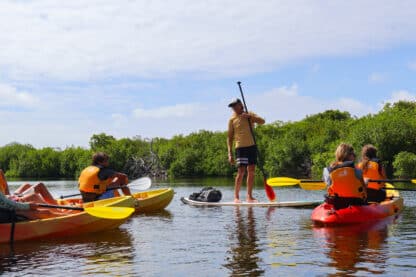
- Led by a local naturalist, students kayak through the Beef Island mangroves to learn about this critical habitat, its marine life, environmental threats, and the role mangroves play in protecting the BVI coastline and ecosystem.
- Turtle Tagging
- Working with the BVI Association of Reef Keepers, Foxtrot and Sierra students assist in sea turtle conservation by helping monitor, tag, and release turtles. The data collected supports ongoing research and marine protection efforts in the BVI.
- Coral Watch
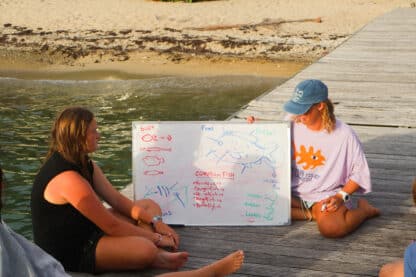
- Discover why corals bleach, how reefs respond to stress, and how scientists monitor reef health. Students then team up for a CoralWatch survey, collecting real data that helps track the condition of local reefs.
- Squid Dissection
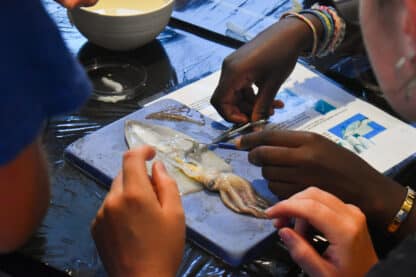
- Building on their invertebrate lesson, students conduct a guided dissection of a Caribbean reef squid, examining anatomy, adaptations, and mollusc characteristics. Some programs may allow the use of dissection waste to feed nearby tarpon.
- REEF Survey
- Hands-on exploration of the anatomy and adaptations of the Caribbean reef squid through a guided dissection. They uncover how these clever molluscs move, hide, and hunt. Some programs even end with feeding curious tarpon afterwards.
Cultural Exchange: Connecting with the BVI Community
Below are a few of the cultural activities that we do during the summers, and the organizations we work with:
- Beach Cleanup
- The fleet participates in shoreline cleanups to remove marine debris and reduce pollution. Student-led discussions highlight the impact of tourism, fishing waste, and human activity on coastal environments.
- KATS (Kids and the Sea) – Foxtrot 2
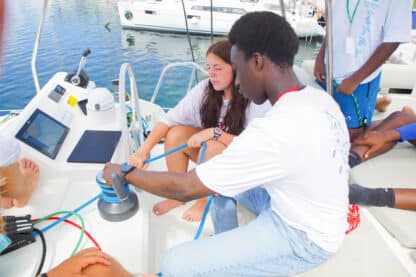
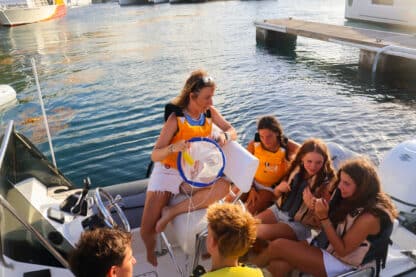
- In partnership with this local nonprofit, Foxtrot students host BVI youth aboard catamarans to teach sailing skills, boat safety, and introduce career opportunities in the marine industry.
- Green VI EcoPark Visit
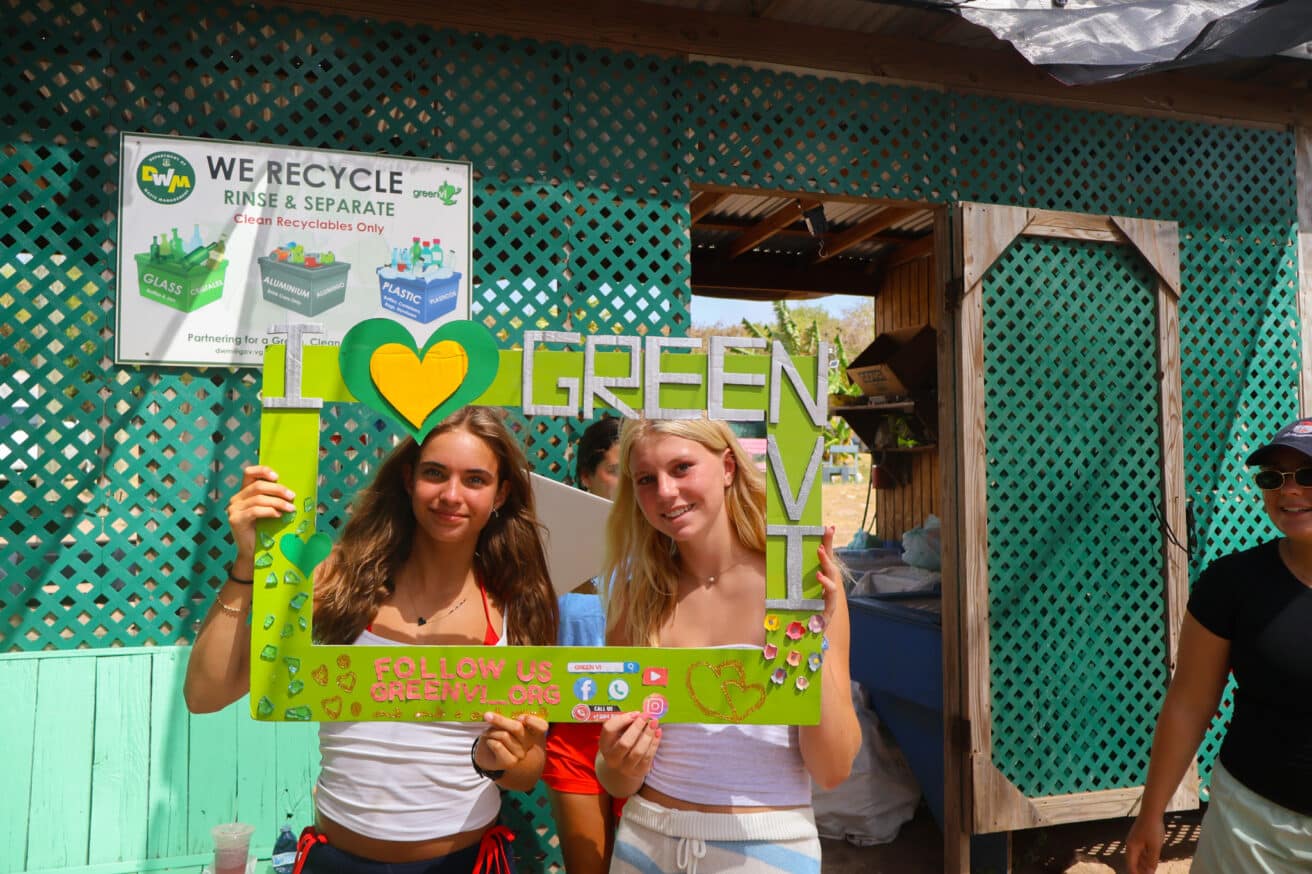
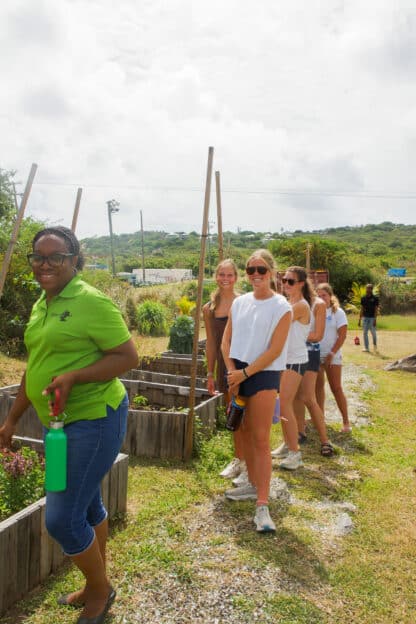
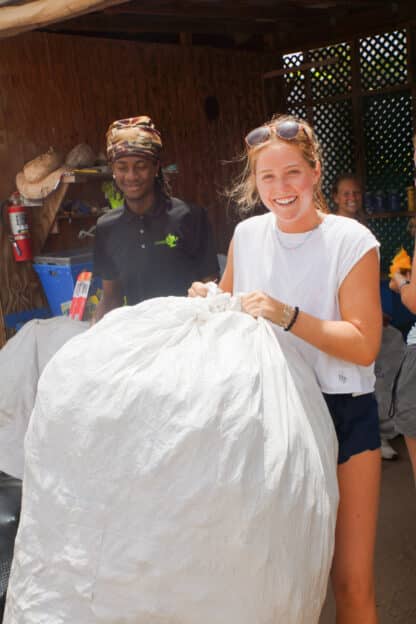
- Students visit the EcoParks in Tortola or Virgin Gorda for a 2–3 hour educational experience focused on recycling, composting, plastic reduction, sustainable gardening, and environmental conservation through guided tours and hands-on activities.
- Composting
- Composting reduces waste sent to landfills and the ocean while lowering our environmental footprint. Organic waste collected on our boats is turned into nutrient-rich fertiliser for local gardens and farms, supporting island sustainability and teaching students practical waste-reduction practices.
Tracking Your Impact: How Many Service Hours Can You Earn?
Sail Caribbean carefully tracks each student’s community service participation and provides verified hours based on program length and focus:
- Foxtrot & Sierra (21-Day): Approximately 20–30 hours of verified service
- Foxtrot & Sierra (14-Day): Approximately 15–20 hours of verified service
- General Programs: 3–5 hours of beach cleanups and environmental stewardship activities
After the program, families receive an official Sail Caribbean Community Service Certificate via email. Our staff are also available to verify hours directly if a student’s school requires a specific documentation process.
Why “Adventure Service” Stands Out on College Apps
Adventure-based service programs stand out on college applications because they demonstrate leadership, initiative, and meaningful personal growth. Rather than simply completing required hours, these experiences reflect a student’s commitment to learning, service, and global awareness. By travelling and contributing to projects that support environmental conservation or local communities, students show college admissions officers a genuine interest in real-world issues and a willingness to step outside their comfort zone. Immersion in new cultures also builds adaptability, independence, and cross-cultural understanding. Most importantly, these experiences give students a meaningful and authentic story to share in their college essays—one that reflects curiosity, responsibility, and a passion for making a positive impact.
The “Fun” Factor: Sailing, Diving, and Service
While community service is a meaningful part of the experience, Sail Caribbean is still, at its core, a summer camp filled with adventure and fun. This isn’t a 9-to-5 volunteer schedule — it’s waking up on a yacht, sailing to new islands, waterskiing in clear Caribbean waters, and diving on historic shipwrecks. Service projects are thoughtfully woven into the program, so they feel like a natural and rewarding part of the journey rather than a separate obligation. The result is a balanced experience where students make a positive impact while enjoying the excitement, freedom, and unforgettable moments of a true summer adventure.
Frequently Asked Questions
Most schools accept the Sail Caribbean certificate, but recommend students check with their guidance counsellors first.
No prior science or diving experience is needed; our staff teaches you everything you need to know.
The excursions we do vary in physical difficulty. They are mostly active (swimming, kayaking, hiking), but accessible for anyone with a general level of fitness. Also, they are conducted in the sun, so adequate hydration and sun protection are a must.


